
Luxembourg: A Trading House without Merchants
How the richest state in the European Union learned to administer capital instead of forming it
From Trier to Luxembourg is fifty kilometres, and the Moselle pays no attention to the border. In Trier the Porta Nigra has stood for more than 1,800 years; the order that built it has been gone for a millennium and a half. Stones outlast orders, and prosperity remains visible long after its sources have dried up. On the other side of the border the same lesson holds in a curious inversion. The fortress of Luxembourg, the «Gibraltar of the North», was razed in 1867 by decision of the great powers, and only the demolition of the walls turned the garrison into a city. The Grand Duchy itself is a leftover of the diplomacy of the Congress of Vienna: set up as a buffer state in 1815, partitioned in 1839, declared neutral in 1867, in personal union with the Dutch king until 1890. A will of its inhabitants to statehood of their own does not appear in this story for a long time. Few states in Europe owe themselves so completely to other people's negotiations. That is precisely what makes Luxembourg such a rich lesson on the question of what a state does with a prosperity it did not bring forth.
Today no country in the European Union reports a higher gross domestic product per head; in the world ranking of the International Monetary Fund the Grand Duchy stands first. To 690,959 inhabitants at the start of 2026 correspond around 494,000 employed persons, 47 per cent of whom commute in every morning from France, Belgium and Germany. Only one employee in four holds Luxembourgish citizenship. Gross domestic product counts what the cross-border workers produce; the per-head calculation divides it among people who contributed only half of it. Gross national income per head is accordingly a good third lower. The difference passes for a statistical blemish; it is rather the key to the country: a substantial part of Luxembourg's prosperity is earned by people who live elsewhere, vote elsewhere and grow old elsewhere.
A few weeks ago I described Zug as a trading house for the world and at the same time warned the canton: a good location can consume its head start in subsidies, compliance and complacency. Luxembourg is the counterpart to that cautionary example, and the comparison is instructive because both places are small, rich and international and yet differ fundamentally in one respect. Zug is a small canton in a confederation of 26 competing cantons, in which citizens decide on their taxes at the ballot box. Luxembourg is a small state at the centre of a union that experiences tax competition as a disturbance and harmonisation as progress. What Luxembourg has become bodes nothing good for that union.
Small state or statism
«Kleinstaaterei», the petty-statery of small states, is a term of abuse coined by the German national movement. It meant the fragmentation of the Reich into principalities, customs barriers and residences, and it presupposed that the size of a state was a value in itself. The opposite position is popular among friends of liberty: small states are better because one can leave them, because mistakes remain visible and because the rulers have to know their subjects. I have often held this position myself, and Zug is a good example of its truth. Luxembourg is an equally good example of its limit.
The Grand Duchy is small on the map and enormous in the lives of its inhabitants. Public expenditure reaches 48.3 per cent of economic output in the 2026 budget, the highest figure in the country's history, in a country without a debt crisis and with the second-lowest debt in the euro area. The public sector was lately the most important driver of employment growth. The full-time positions of the central state alone rose from 24,289 in 2016 to 34,445 in 2024, an increase of 42 per cent, while the population grew by 18 per cent. The adjective «small» was never the active ingredient of the small state. What a state does and what its citizens can refuse it decides its character, and that question arises in a village as in an empire. Smallness helps as long as emigration remains credible and the coffers lean; it no longer helps once the state is the largest employer, the largest builder and the most coveted provider. Then the small state is merely a state with a shorter path to the public purse.
The Spanish secessionist movements show where the confusion leads. Catalonia and the Basque Country pass for a hope among many friends of liberty because they stand up to Madrid. The Basque Country already collects its own taxes and has long spent considerably more per head than Catalonia or Madrid; in public health provision it stood at the top of all regions in 2023. The Catalan process was carried by a bourgeois party together with a republican left and an anti-capitalist party, and the promised republic was above all a welfare state under its own flag. Both regions cultivate an old cooperative tradition to which ideologues have attached a «left» interpretation: the Spanish central state is held there to be identical with a centralised capitalism, which is why criticism of the system flourishes. Were Catalonia and the Basque Country independent states, they would be even more statist than the already extremely statist Spain. Separatism, understood in this way, is the wish to own the apparatus one pretends to fight. Whoever wants to take distribution into his own hands fights the distributor in Madrid with the same energy with which he will later distribute in Barcelona.
Luxembourg shows what such a project looks like after 150 years: a people whose most ambitious sons and daughters strive for the civil service, while strangers occupy the factories, the banks and the building sites. The size of the state is secondary to the question of whether its offer can be refused. In Luxembourg the majority of voters live off that offer, which is why hardly anyone refuses it.
From Minette ore to fund factory
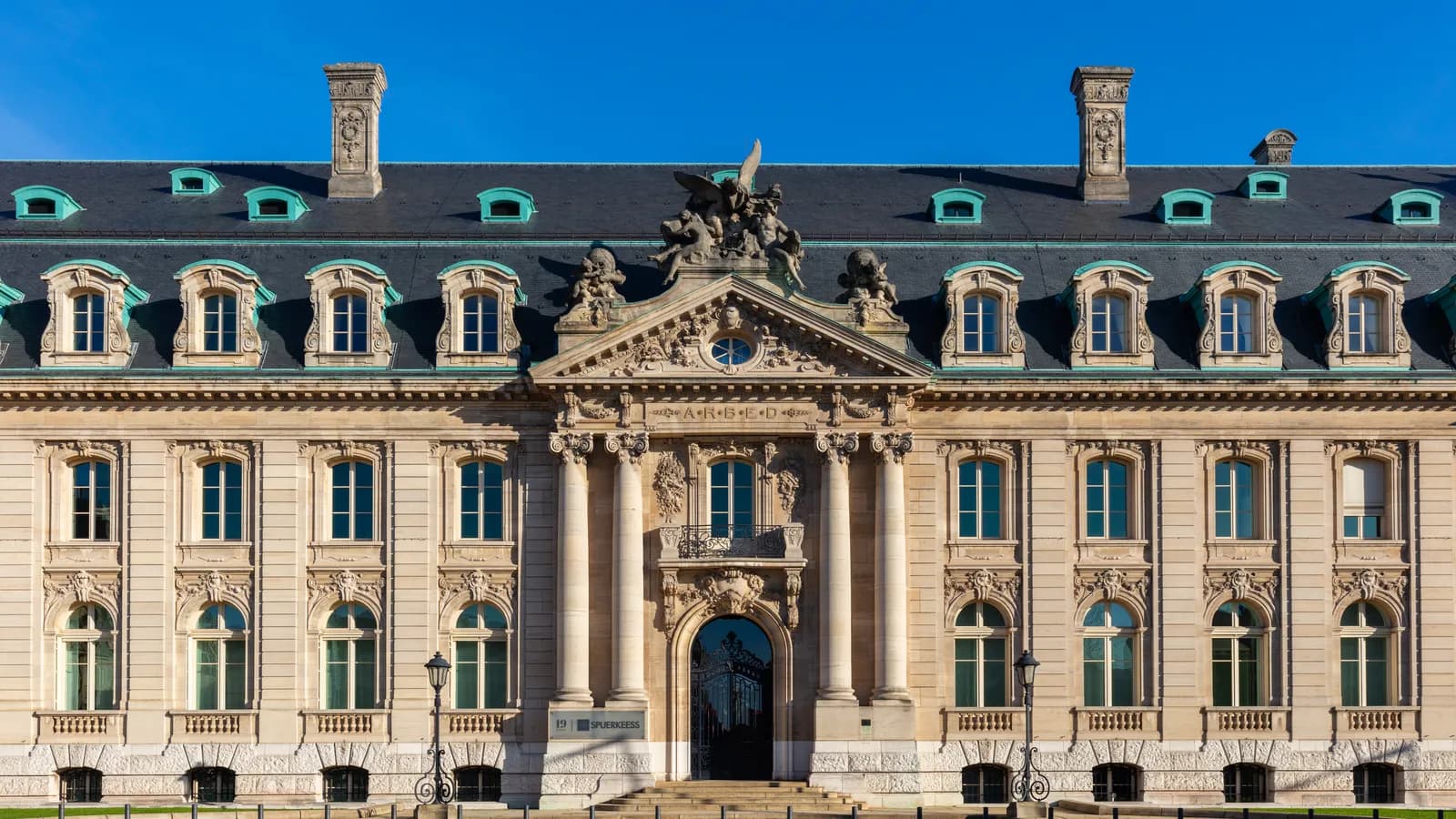
Luxembourg's economic history knows two inventions of the country, and both times the decisive part came from outside. The first began with the ore: the Lorraine-Luxembourg Minette ore was long of little use because its phosphorus content made the steel brittle. Only the Thomas process made it, from 1879, the raw material of a world industry. German and Belgian capital, the Zollverein, to which Luxembourg had belonged since 1842, and workers from Italy and later Portugal turned the agrarian south of the country into one of the densest industrial landscapes of Europe. In 1911 a merger created ARBED, for a time one of the largest steel groups in the world. At its height the steel industry carried around a quarter of economic output; in 1974 some 25,000 people worked in mills and mines, a sixth of all employees. Then the world market collapsed: in 1975 alone production fell by more than a quarter, and by 1985 the workforce had halved.
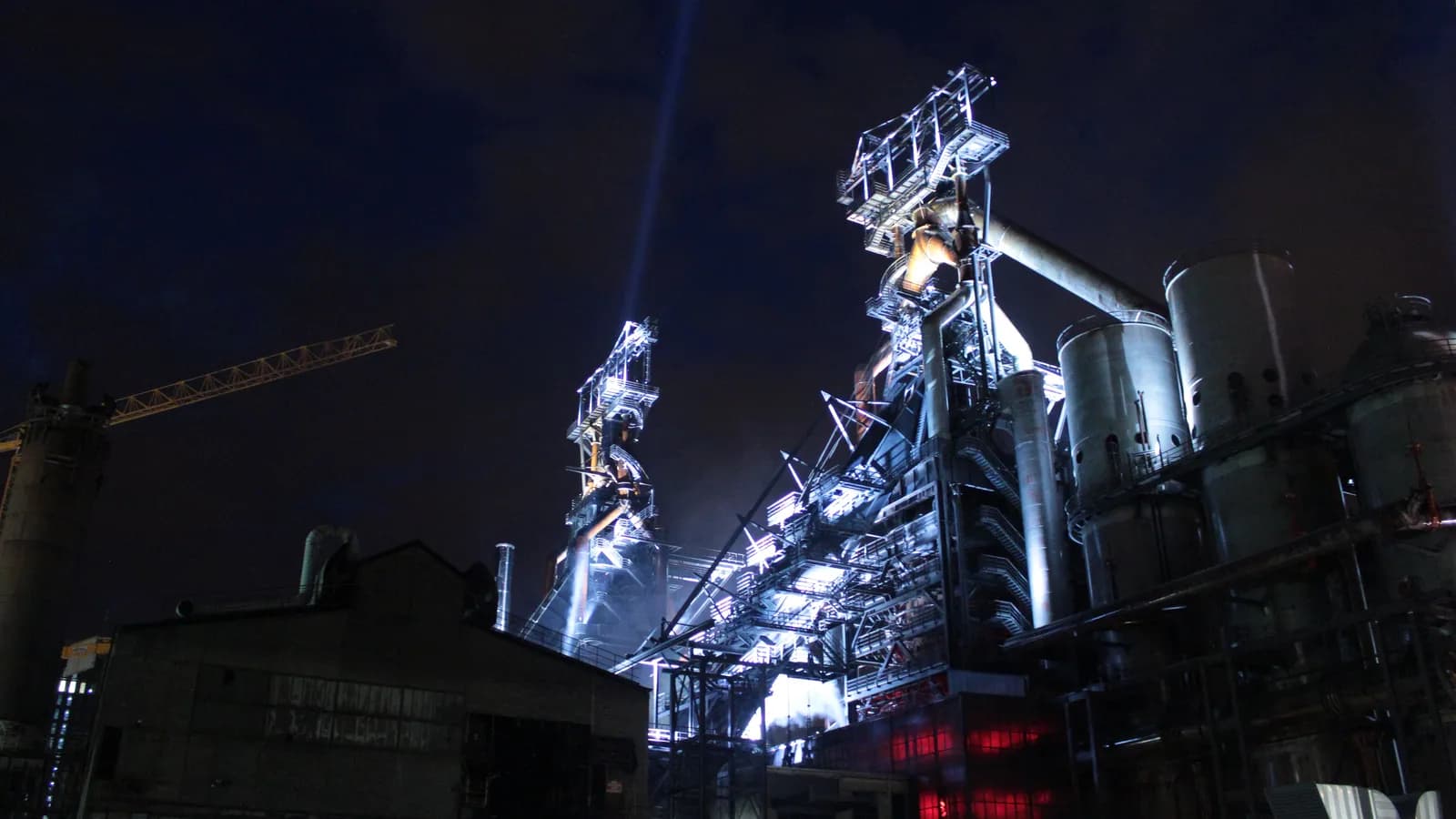
Luxembourg's answer to the crisis became the founding myth of the country: from 1977 the «Tripartite» gathered government, employers and trade unions around one table, distributed the costs of the contraction and preserved social peace. The model was successful, and it has burnt itself in deeply. Since then every question of weight in Luxembourg is decided at that table, at which no one sits who risks capital of his own. What became of ARBED says the rest: it merged into Arcelor in 2002 and into ArcelorMittal in 2006; the headquarters remained in the city of Luxembourg, ownership passed into the hands of an Indian entrepreneurial family.
The second invention was long prepared. As early as 1929 a law created the tax-exempt holding company, in 1963 the first Eurobond was listed on the Luxembourg stock exchange, and in the 1970s and 1980s bank secrecy drew the savings of German and Belgian small savers across the border. The decisive step came in 1988: the country was the first state to transpose the European directive on investment funds into national law and thereby became the home port of a product that could be sold throughout the Community with a single passport. In 1999 Luxembourg was the largest fund centre in Europe; in 2003 it transposed the third version of the directive first once again. Today funds authorised in Luxembourg manage around six trillion euros; only the United States is larger. The financial sector generates about a quarter of economic output with a tenth of the employees.
Both inventions owe themselves, as in Zug, to the ability of a good learner: to recognise early what others need and to keep rules stable. The difference lies in the object of the learning and in its frame. Zug learned to make taxes predictable and to call back promptly, under the pressure of 25 other cantons and of citizens who decide on their taxes at the ballot box. Luxembourg learned to transpose directives faster than everyone else, under the eyes of a Commission that regards tax competition as an error and speed of transposition as a virtue. Its comparative advantage lay in the transposition itself, in the speed with which a decision from Brussels became a marketable legal framework on the Alzette; a product, a bank or an invention is sought in vain in this story. The good is produced elsewhere; Luxembourg produces the form with which it may be sold in Europe. One can call that location policy or, less kindly, the letting of statehood: Luxembourg sells its membership of the Union as a legal shell, and the price of the shell rises with every new rule Brussels issues, because every rule makes the shell more indispensable.
Consumed: the Union in miniature
Unfortunately this makes Luxembourg prototypical of the Union whose model pupil it wants to be. Its capital has grown historically: ore, steel, a century of industrial discipline, then four decades of regulatory head start. Its income is to a large extent consumed, and consumed by the state. Eleven billion euros the country spends in 2026 on the salaries of the public sector, 11.6 per cent of economic output against 9.2 per cent in 2016. According to the OECD, teachers earn more in no other country; the average salary in the civil service lies around a hundred thousand euros, and an automatic index raises it by 2.5 per cent with every rise in the cost of living, four times between 2022 and 2024. Public transport has been free throughout the country since 2020. The budget of the central state amounts to 32.6 billion euros, around 47,000 euros per inhabitant, children included.
What matters is who fills these posts. Only one employee in four in the country is a Luxembourger; in the civil service it is nine in ten. The national language works here as a barrier to entry that hardly any cross-border worker overcomes, and the domains of sovereign authority remain reserved for citizens in any case. Thus a division of labour has settled in that nobody decided and nobody can change any more: the strangers produce the gross domestic product, the natives administer it. The civil service has become the sinecure of a statist population that does not experience it as a privilege because it knows nothing else. One recognises the ideal of being passed along that I know from Vienna as the life plan of the middle class: kindergarten, school, university, public office, retirement. In Luxembourg it has become the ideal of an entire nationality.
The bill for this has already been written, only not yet delivered. Luxembourg's pension insurance lives on the fact that every year more cross-border workers pay in than pensioners draw out. In 2022 there were still 2.3 contributors to every pensioner; by 2070, according to the OECD's calculations, the ratio falls below one. To keep it stable, the country would have to attract around 1.2 million additional workers over that period, for whom it has neither housing nor roads. The same OECD finds that productivity has stagnated for fifteen years and that growth came solely from the number of workers. A country that grows richer because more people commute in, and in which housing therefore costs 78 per cent more than the European average, lives off inflow. It consumes its capital in the same way as the Union: high claims, little replenishment, and a bill that goes to people who are not yet allowed to vote.
The Union is in large what Luxembourg is in small. Its capital is the substance of the cities, legal orders, factories and trade routes that Europeans built over centuries at their own risk. Its income is an apparatus that farms this substance, certifies it, redistributes it and takes its own funding for a proof of its own productivity. Luxembourg has carried this confusion through most consistently, because on the Kirchberg it houses both, the capital in the custody accounts and the apparatus in the office buildings, a few hundred metres apart.
The model pupil
In November 2014 an international consortium of journalists published 548 tax rulings that a single advisory firm had negotiated with the Luxembourg tax administration for more than 340 corporations. The rulings dated from the years in which Jean-Claude Juncker governed the country, and they became public a few days after he took office as President of the Commission. A year earlier Luxembourg had, under pressure from the Union and the United States, surrendered its bank secrecy for foreigners; since 2015 it reports interest to the tax authorities of its neighbours, since 2017 all accounts under the global standard. The business model that had rested on discretion since 1929 was finished within two years.
Thereupon the country reinvented itself as a model state, without giving up the model. Whoever once passed for a tax haven must henceforth be the most correct place on the continent, and Luxembourg has become that: it transposes every directive first, keeps every register, checks every beneficial owner and reports every cross-border arrangement. The tax privilege persists; participation income remains exempt, funds remain largely untaxed. The price of the privilege is the over-correct execution of all the rules meant to hedge it in. This execution, which appears as a cost factor of the business, has long since become the business itself: every new rule from Brussels creates in Luxembourg new posts, new law firms, new auditors and new fees, and all of them are paid out of the return on the very wealth the rule supposedly keeps in check.
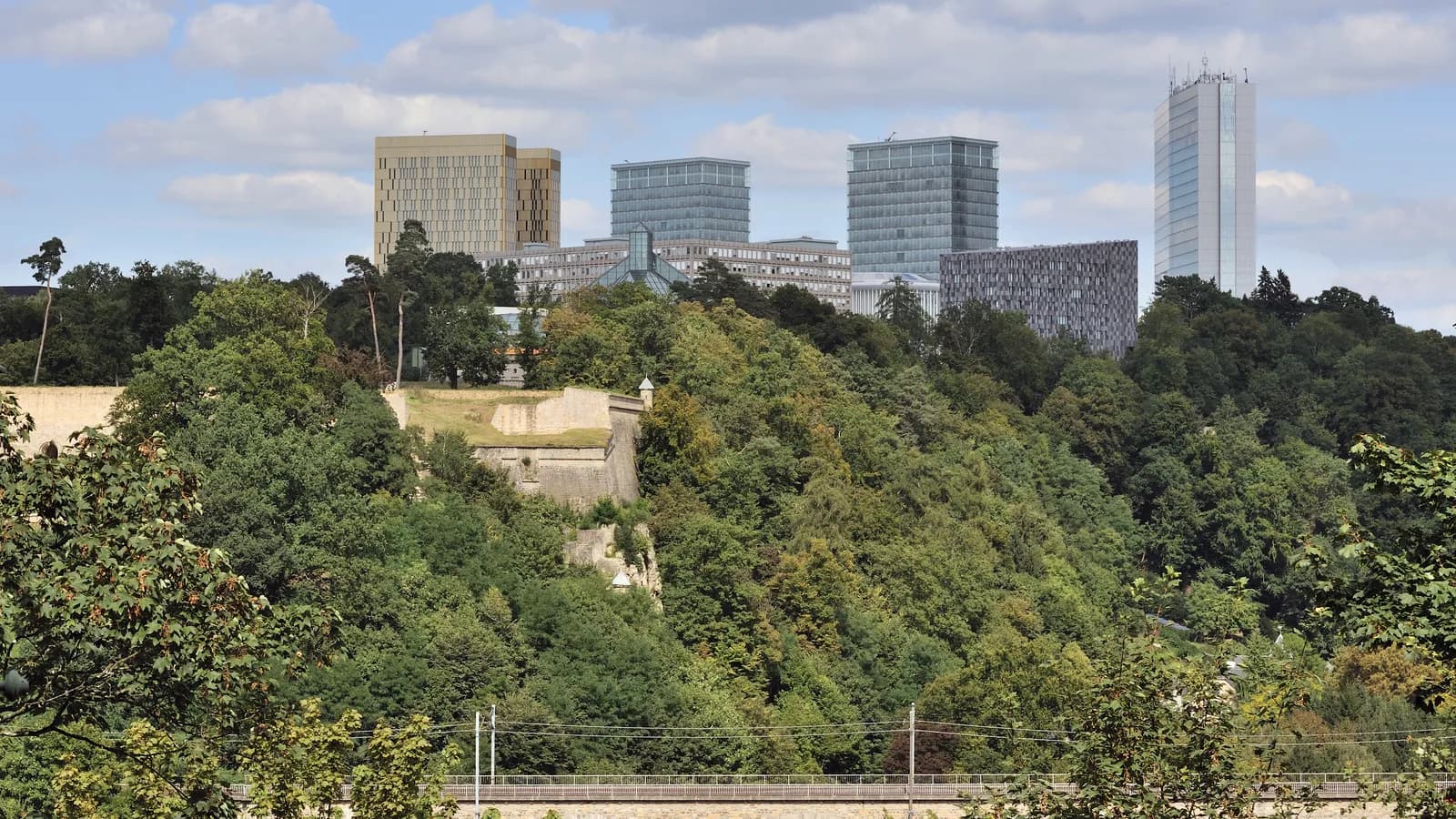
On the Kirchberg, where the outworks of the fortress stood until 1867, 14,500 officials of the Union work today, almost a quarter of its entire staff, more than anywhere except Brussels. The Court of Justice sits here, the Investment Bank, the Court of Auditors, and since 2012 the Stability Mechanism, which administers the rescue loans of the eurozone. Robert Schuman was born in Luxembourg, Pierre Werner drafted the monetary union in 1970, and with Gaston Thorn, Jacques Santer and Juncker the country supplied three Presidents of the Commission, more than any other. Therein lies the business model in its purest form. Luxembourg lives off the Union as a spa town lives off its baths: it has housed the apparatus, fed it and staffed it, and it has learned to confuse its own existence with the existence of the apparatus.
Juncker
Jean-Claude Juncker is the prototype of the technocratic functionary, and one does him no justice by making him a villain. He was prime minister for 18 years, longer than any other head of government in the Union, chairman of the Eurogroup for eight years, President of the Commission for five. He is multilingual, witty, quick and, in a rare way, candid about the method by which he worked. That candour is his real contribution to contemporary history. In December 1999 he described to «Der Spiegel» the procedure of European integration: «We decide something, then put it out there and wait a while to see what happens. If there is no great outcry and no uprising, because most people do not understand what has been decided, then we carry on, step by step, until there is no turning back.» In 2007, asked about reforms, he added that we all knew what to do; we simply did not know how to get re-elected afterwards. In April 2011, in the midst of the euro crisis, came the sentence: «When it becomes serious, you have to lie.» At the beginning of 2015 he told the Greek government in «Le Figaro» that there could be no democratic choice against the European treaties. Switzerland he called in 2010 a «geostrategic absurdity».
Juncker later explained that he had meant the sentence of 1999 critically. Even if one believes him, it remains the most precise description of how the Union was built, and it comes from one of its master builders. Ten years ago I wrote that I would turn his sentence about lying around: when you have to lie, it is serious. He confirmed it himself when he had to resign in 2013 because the Luxembourg secret service under his supervision had tapped politicians' telephones, taken bribes and bought luxury cars for private use. A year later he became President of the Commission. There is no better example of the fact that politics is the only field in which failure leads to more power and income.
The functionary does not notice what he gives away, for he describes the method with the pride of a craftsman showing his tools; that is precisely where the diagnosis lies. A system that distributes attracts people who want to distribute and promotes those who do it quietly. After a few decades the distributing class is the only one that still reliably reproduces itself, and its best are people like Juncker: gifted, loyal, untroubled by the question of who pays for it all. Luxembourg brought him forth as it brings forth its civil servants, and sent him to Brussels, where he practised the same craft on a larger scale.
The squandering of prosperity
The squandering of prosperity, Wohlstandsverwahrlosung, expresses itself in the search for pseudo-problems out of existential boredom, in living off the unearned and the ununderstood, in high expectations under low pressure to perform, in substitute religions, in virtue signalling and above all in a cushion that separates from reality. It befell the wealthiest places of old Europe with a regularity that suggests a law. Venice, Bruges, Antwerp, Amsterdam and lastly Vienna passed through the same sequence: merchants became rentiers, rentiers became pensioners of their own past. The mechanism consists of relief and of greed. Relief sets in when the pressure to perform slackens because others do the work and a cushion absorbs every mistake. Greed, however, takes a particular form: enrichment no longer suffices, one demands status in addition, the visible confirmation that one's own rank is deserved.
Luxembourg supplies both ingredients in pure form. Relief is provided by the cross-border workers, the index and the civil service; status is supplied by the apparatus. Fifteen years ago I was invited to Luxembourg as a speaker at an international conference of central bankers. For one dinner an entire castle had been hired, complete with its own trumpeters and professional court jesters; along a long red carpet the lords of our age strode through the gate to fanfares, and in the hall of the European Investment Bank, modelled on a parliament, I took my place on the government bench. The fringe programme alone made clear that I was very close to the source of money. The jesters were allowed to juggle and to tell harmless jokes. That is status consumption in its purest culture, and in Luxembourg it is seldom paid for privately.
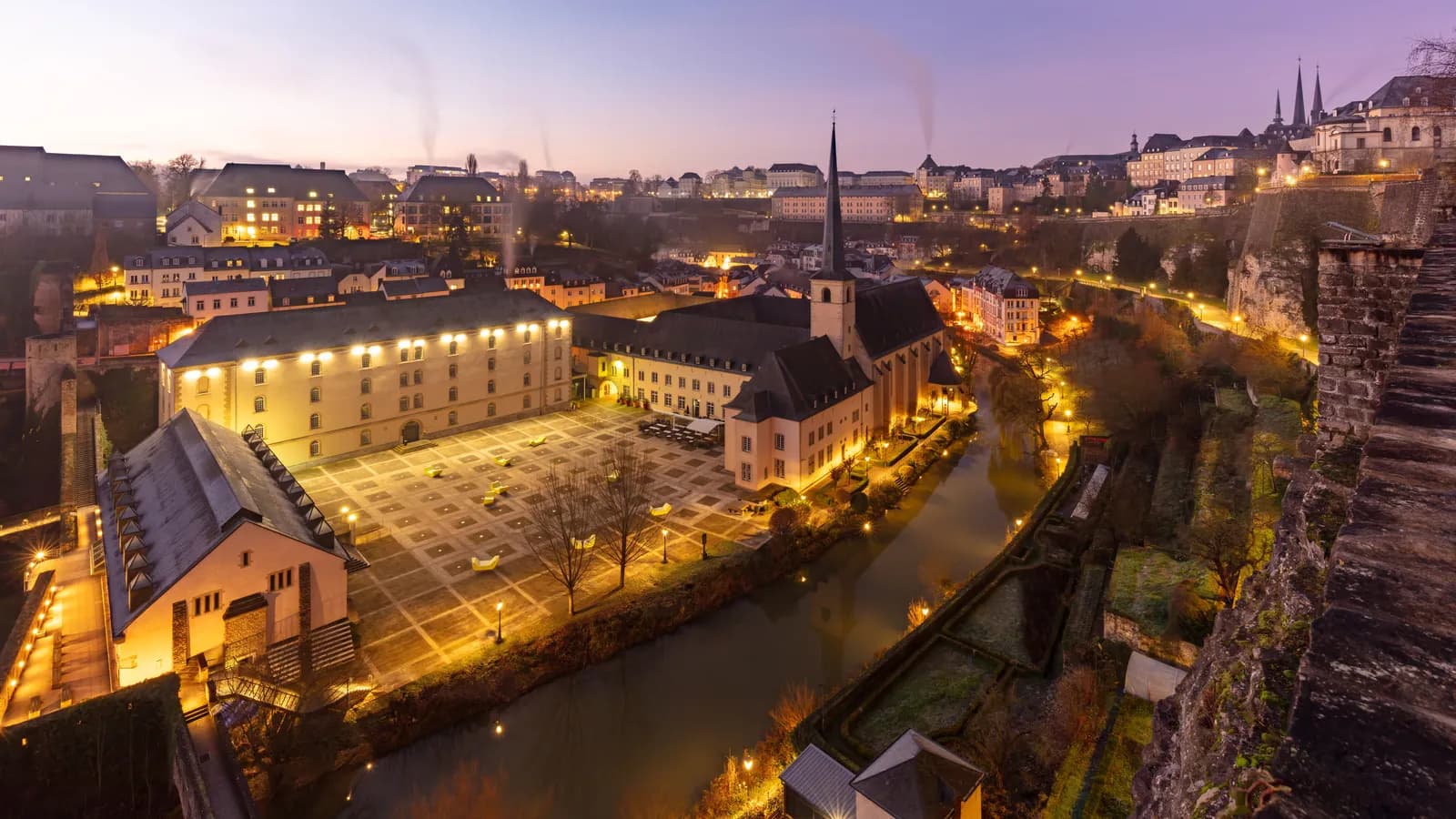
The traces of this consumption become visible with delay, and in Luxembourg they are visible now. The old town on the rock above the Alzette and the Pétrusse has been a World Heritage site since 1994 and is among the most beautiful cities of Europe. A few hundred metres further, in the station district, a restaurateur clears syringes, rubbish and excrement from his doorstep for half an hour every morning, and many shop premises stand empty because customers avoid the streets. Residents demonstrated in 2023 under the motto «Save the Gare»; the great majority of them may not vote in the country. In May 2025 the mayor called the situation «dramatic», the interior minister declared that inaction was not an option, and the government presented a second drugs plan: more video surveillance, more judges, 2,800 police patrols in four months in the capital alone, a good third of them around the station, more than 200 dealers arrested per year, a place ban that was later tightened. 429 people without a roof were counted on one winter night; the charity by the station served more than 11,000 people in need in 2023, half as many again as the year before. A video that presented the district as the worst quarter in the country angered the authorities in 2026 more than the condition it showed.
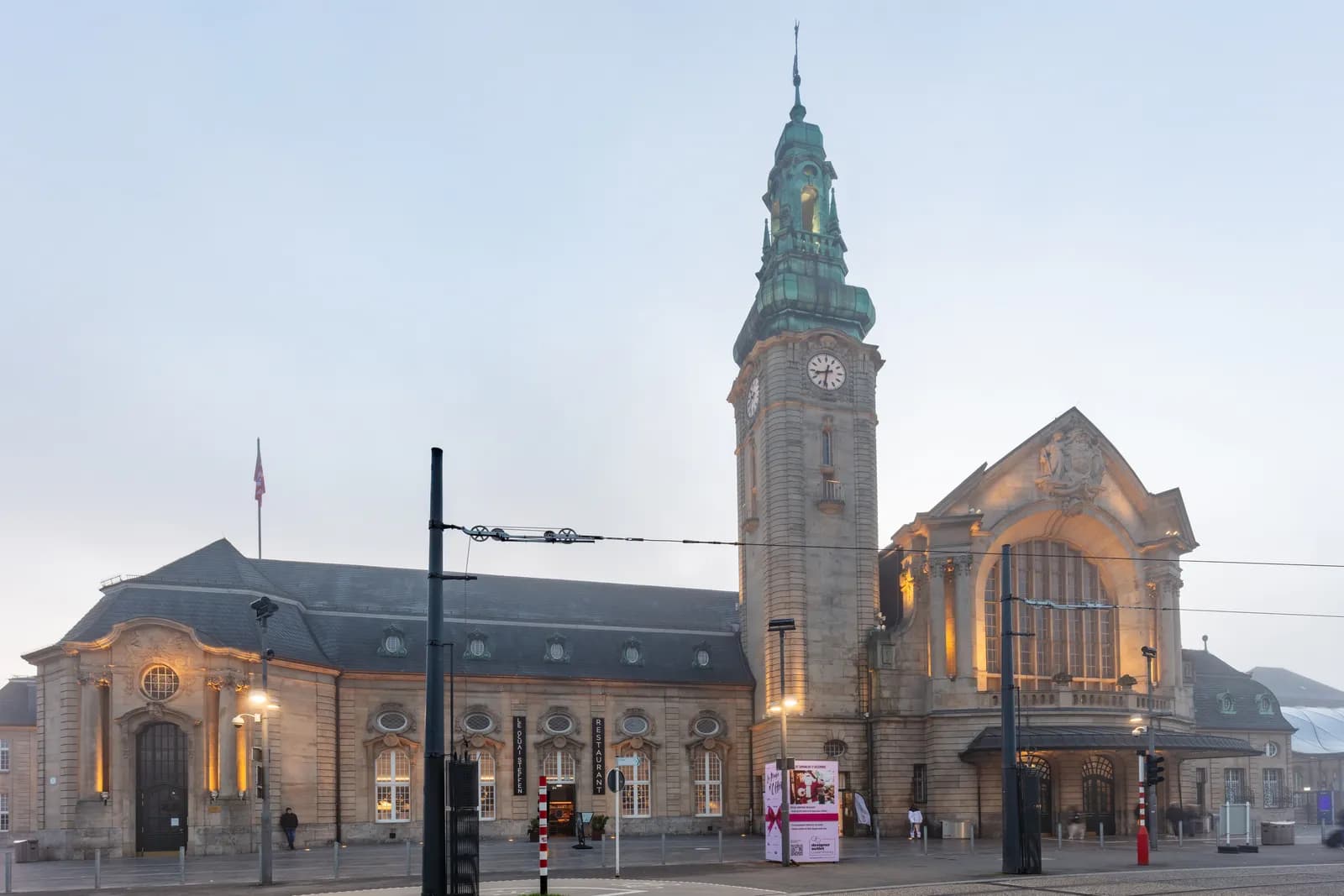
That so rich a country failed to notice this decay for so long is no accident. The change is gradual, it began at the highest level in the world, and the budget is large enough to answer every deterioration with a programme before it reaches anyone who decides. The Luxembourgers who fill the posts seldom live by the station, and whoever lives there decides on no posts.
The trap of the financial centre
In Zug I described the intermediary layer of trustees, lawyers and compliance specialists as parasitic and added that this was no insult, merely a description of function. Whoever is paid voluntarily because he resolves a real conflict or protects property creates value; whoever lives off politically generated complexity draws on the production of others. In Luxembourg that layer is largely identical with the financial centre. A fund that is to be sold in Europe needs a Luxembourg shell, and the shell needs a depositary, a management company, an auditor, a law firm, a notary and a supervisory fee. None of these participants improves the investment; all of them participate in the network effect: because everyone else is here, everyone must be here, and because everyone must be here, every participant can charge a fee that has little to do with his contribution. The return is largely unearned, and it is nonetheless legal, audited and certified several times over.
For the investor the location is a trap of a peculiar construction. The tax privilege is real, and it is paid for with transparency. Whoever brings his wealth into a Luxembourg structure delivers in return, every year, an ever more complete map of his financial existence: beneficial owners, proofs of origin, reports to the tax authorities of more than a hundred states, notifications of every arrangement that might produce a tax advantage. The structure must be fed continuously, and every feeding nourishes a further layer of people whose income depends on the immobility of the wealth. After a few years, dissolution costs more than continuation. The wealth ossifies: an ever larger part of its return flows into administration and compliance, an ever smaller part into entrepreneurial use, and the incentives to undertake anything at all decline with every rule that pays the administrator. One can protect wealth from taxes in Luxembourg. From its own administrators it can hardly be protected there any more.
The Cantillon effect completes this sclerosis. In phases of monetary expansion a redistribution runs from the last to the first recipients of new money, and the first recipients are large borrowers, the subsidised and public employees. Luxembourg unites all three roles in the narrowest space. The central bank's money creation since the financial crisis flowed predominantly into assets, and assets are held in custody in Luxembourg: the country's fund assets tripled between 2006 and 2021 while productivity stagnated. The Stability Mechanism that distributes the rescue loans sits on the Kirchberg; so does the Investment Bank, the largest multilateral lender in the world. The country's prosperity grows with the money supply, hardly with its performance. Whoever sits at the source easily takes the stream for his own merit; the OECD's findings on productivity are the sober version of that confusion.
A trading house without merchants
Zug became a trading house for the world because merchants came: traders who connected time, place, risk and knowledge afresh and bore the costs of their own errors. Luxembourg has developed the form of the trading house more perfectly than any other place in Europe. It keeps the books, holds the custody accounts, stamps the passports and checks the beneficial owners. The merchants, however, sit elsewhere, in London, New York, Paris and Frankfurt, and never enter the trading house. The country's own population strives for the offices, the strangers build, commute and produce, and the return is divided between an apparatus that administers it and a layer that certifies it. What remains of entrepreneurship belongs to foreigners or is played at by the state: in 2017 the country was the first in Europe to pass a law on the ownership of resources from outer space, set aside 200 million euros and within two years lost the twelve million it had entrusted to an American asteroid-mining company. Zug knows a smaller edition of the same temptation with its blockchain professors, and in both cases no customer decides whether a return will ever arise. The difference lies in the corrective. Zug has neighbours who can do better and citizens who are allowed to say no. Luxembourg has the Union, and the Union has in Luxembourg its model.
Luxembourg does at least possess what most locations lack: time, a cushion and low debt. Unfortunately time is exactly what the squandering of prosperity needs to become irreversible. The small state protects against nothing as long as it remains a state whose offer nobody can refuse. The fortress was razed in 1867, and the city grew rich because it was no longer allowed to be a fortress. On the Kirchberg a new one has been growing ever since, made of forms, in which wealth is less defended than besieged.
Acknowledgements: The Luxembourg lawyer Laurent Heisten contributed important background that has found its way into this essay. I thank Christian Langer and the Hayek Society for the invitation to Trier, which once again took me by way of Luxembourg.
A note on sources
Population, employment and cross-border workers: Statec (as of 1 January 2026 and end of 2025). Public expenditure, personnel costs and growth in posts: budget 2026 and the analysis of the Chamber of Commerce (Carlo Thelen, October 2025). Productivity, pensions and the financial sector: OECD Economic Survey Luxembourg 2025. Steel history: luxembourg.public.lu. Fund centre: CSSF, Luxembourg for Finance. LuxLeaks: ICIJ, November 2014. Juncker quotations: Der Spiegel 52/1999; The Economist, 15 March 2007; dapd/Spiegel, April 2011; Le Figaro, February 2015; Die Zeit, December 2010. Station district: Le Quotidien (September 2023), L'essentiel (May 2025 and 2026), Tageblatt; homelessness count Inter-Actions 2025; Stëmm vun der Strooss. Space law: statement of the Minister of the Economy to Parliament, November 2018.
Rahim Taghizadegan is the last Austrian representative of the Austrian School in the direct tradition, entrepreneur, author of more than fifteen books, university lecturer, and the founder of scholarium, citadel.garden, and deedsats.
Scholien by email · since 2009
Scholien. Monthly marginal notes by Rahim Taghizadegan on the present, written in the mode of the Viennese school.
One issue a month. Your address is never passed on; unsubscribe with every issue.