Europäisches Erbe · lange Dauer
Was überdauert
Menschen können etwas schaffen, das sie überdauert. Sie können Wissen erschliessen, Unternehmen gründen, Kapital bilden, Orte gestalten und Institutionen errichten, in denen ihre Leistungen weiterwirken. Aus dieser Möglichkeit erwächst eine der grossen Aufgaben menschlicher Freiheit: die eigene begrenzte Lebenszeit in etwas Bleibendes zu verwandeln.
Zu den frühesten Anwendungen der Schrift gehörten Rechnung und Verwaltung: Die ältesten Tafeln von Uruk verzeichnen Getreide, Vieh und Verbindlichkeiten, Jahrhunderte bevor jemand Verse niederschrieb. Rom gab dem Handeln Vertrag, Haftung und Dauer. Das Abendland brachte seit dem 12. Jahrhundert eine besondere Verbindung von Lebensformen und Institutionen hervor; Max Weber sah in ihr die Eigenart des Okzidents. Die selbstverwaltete Stadt und die Gemeinschaft der Gelehrten, später die Börse und die Aktiengesellschaft gaben eigenständigem Handeln eine dauerhafte Form, im Zusammenspiel mit Städten und Herrschern, die ihnen Privilegien gewährten. Diese Formen ermöglichen Menschen, sich zusammenzuschliessen, Wissen zu prüfen, Eigentum zu ordnen, Risiken zu teilen und Vorhaben zu verwirklichen, deren Reichweite die Kräfte eines Einzelnen übersteigt. In den italienischen Handelszentren entstand dazu die doppelte Buchführung, mit der eine Familie erstmals präzise wusste, was sie über Generationen hielt und riskierte.
In diesen Formen gewann ein besonderer menschlicher Typus Gestalt, Ansehen und Freiheit: der Pionier, Unternehmer, Abenteurer, Erfinder und Entdecker. Als Abenteurer, englisch adventurers, bezeichneten die Handelskompanien des 16. und 17. Jahrhunderts ihre Teilhaber, die Kapital in eine gemeinsame Unternehmung wagten. Der Pionier erkennt Möglichkeiten und macht sich auf, sie zu erproben. Er handelt unter Ungewissheit, führt Mittel zusammen, trägt Verantwortung für Gewinn und Verlust und braucht Menschen, die seine Arbeit fortsetzen können. Persönliche Initiative und dauerhafte Institutionen gehören zusammen.
Im 16. Jahrhundert begannen die Gelehrten, von den Kaufleuten zu lernen: Die Schule von Salamanca las an den Märkten ab, dass der Wert der Dinge im Urteil der Handelnden entsteht; später verstand die schottische Aufklärung Ordnung als Ergebnis menschlichen Handelns ohne menschlichen Entwurf; Wien machte daraus ein Forschungsprogramm. Getragen wurde diese Linie selten von Palästen und Lehrstühlen. Ihre Orte waren Kontore, Klöster, Werkstätten und Familienbibliotheken: Orte, an denen Wissen haftete, weil eigenes Vermögen, eigene Kinder und der eigene Name auf dem Spiel standen.
Das scholarium versteht sich als Erbe dieser Tradition und übernimmt die Aufgabe, sie freizulegen, zu prüfen, zu vermitteln und fortzuführen. Vieles von diesem Erbe ist verschüttet. Formen können fortbestehen, während Entscheidung und Zweck an andere übergehen: Eine Institution kann ihren Namen behalten und ihre innere Selbständigkeit verlieren, eine Familie kann Eigentum erben und die Fähigkeiten einbüssen, durch die es geschaffen wurde.
Im Mittelpunkt steht die Frage, wie Vermögen entsteht und Bestand hat. Vermögen erweitert menschliche Handlungsfähigkeit; sein Wert erschliesst sich auch aus dem, was Menschen mit ihm vermögen. Sein Aufbau verlangt produktive Fähigkeiten, Sparen, also den Verzicht auf unmittelbaren Verbrauch für ein fernes Ziel, unternehmerisches Urteil und einen verständigen Umgang mit Kapital. Sein Erhalt verlangt Aufmerksamkeit für Geld, Haftung, Liquidität, Eigentumsordnung und politische Bedingungen, seine Fortführung Menschen, die Verantwortung übernehmen. Das scholarium verbindet dafür europäische Erfahrung, ökonomische Theorie und unternehmerische Praxis. Die Geschichte zeigt Entstehung und Niedergang von Unternehmen, Handelshäusern, Vermögen und Institutionen; auch Irrtum, Privileg, Macht und Scheitern gehören zu dieser Prüfung, und die eigene unternehmerische Erfahrung unterliegt ihr ebenso.
Vermögensbildung ist damit eine Bildungsaufgabe im umfassenden Sinn. Sie betrifft den jungen Menschen mit ersten Rücklagen ebenso wie den Unternehmer, den Anleger und die Familie, die Eigentum über Generationen verantwortet. Der Anspruch des scholarium ist, die kompetenteste Institution für das Verständnis und die Vermittlung dieser Zusammenhänge zu werden. Es nimmt dabei selbst die Gestalt dessen an, was es vermittelt: eine autonome Institution, in der Gelehrsamkeit, Gespräch, Kapital und Unternehmungsgeist zusammenfinden. Dass sein Gründer diese Verbindung zuerst in der eigenen Familiengeschichte fand, davon erzählen die folgenden Kapitel.
Herkunft · 1980er/1990er
Zwei Erbschaften
Was Europa über Jahrhunderte verband, begegnete dem Gründer zuerst als Familiengeschichte. Seine Biografie begann mit zwei sehr verschiedenen Erbschaften, die sich später als erstaunlich gut zusammengehörig erwiesen. Sein Vater, ein iranischer Azeri, stammte aus einer Familie von Händlern. Seine Mutter, eine Wienerin, aus einer Familie von Gelehrten und Buchdruckern. Von der einen Seite kamen Unternehmergeist, Beweglichkeit und der Wunsch nach wirtschaftlicher Unabhängigkeit. Von der anderen kamen Bücher, Kultur, Berge und die fast unersättliche Neugier auf Zusammenhänge.
Schon während der Schulzeit arbeitete er am Astronomischen Institut mit, gründete eine Schülerzeitung und engagierte sich politisch. Ihn interessierten die grossen Fragen, doch mit Meinungen über sie wollte er sich nicht begnügen. Darum wählte er Technische Physik. Sie schien ihm das anspruchsvollste Rüstzeug zu bieten, um von Vermutungen zu belastbarem Wissen zu gelangen.
Er spezialisierte sich als Atomphysiker und beschäftigte sich mit Risikoforschung, komplexen Systemen und Wissenschaftstheorie. Die Physik lehrte ihn etwas, das später für alle Bereiche entscheidend blieb: Ein Modell ist nicht die Wirklichkeit. Je komplexer ein System ist, desto vorsichtiger muss man mit der Vorstellung sein, es von aussen steuern zu können. Diese Einsicht führt direkt zu Fragen, die weit über die Physik hinausreichen. Was geschieht, wenn die Elemente eines Systems Menschen sind, die lernen, irren, hoffen, fürchten und ihre Pläne ändern?
Ein Modell ist nicht die Wirklichkeit.
Das Wien seiner Studienzeit war geistig verarmt, aber keineswegs leer. Wer suchte, konnte noch auf lebendige Spuren grosser Traditionen stossen. Am Atominstitut begegnete er der Welt Helmut Rauchs, bei dem der spätere Nobelpreisträger Anton Zeilinger studiert hatte. Über Erhard Oeser, einen Schüler Karl Poppers, und Franz Wuketits öffneten sich Wege zur Wissenschaftstheorie und Evolutionslehre, über Harald Mori, einen Schüler Viktor Frankls, zur Wiener Psychotherapie und zu Frankls Kreis. In Laxenburg bei Wien war die Systemanalyse gegenwärtig. In Altenberg bei Wien steht das Haus von Konrad Lorenz, in dem damals noch fachlicher Austausch am Mittagstisch stattfand. Die Filmdokumentationen seines Schülers Irenäus Eibl-Eibesfeldt hatten den ersten Berufswunsch des Gründers inspiriert. In Baden bei Wien hielt der letzte Vertreter der Wiener Schule der Medizin, Karl Hermann Spitzy, seinen Salon. In einem alten Zinshaus am Donaukanal hielt Rainer Ernst Schütz den letzten bürgerlich-liberalen Salon Wiens, in dem der Gründer Stammgast und Hausfreund war. Es gab noch Menschen, in denen das alte interdisziplinäre Wien nachklang: eine Stadt, in der Physiker, Psychologen, Philosophen, Ökonomen, Künstler und Unternehmer miteinander sprechen konnten, ohne erst die Erlaubnis ihrer Fachgrenzen einzuholen.
Nur eine Tradition fand er ausgerechnet an ihrem Ursprungsort nicht: die Österreichische Schule der Ökonomik.
Entdeckung · 1990er/2000er
Eine Wiener Entdeckung in Amerika
Der junge Physiker musste in die USA reisen, um die Wiener Schule als lebendige Tradition kennenzulernen. Während seiner Aufenthalte und Studien dort, besonders im Umfeld eines Forschungsstipendiums in Washington und später bei Seminaren in New York, begegnete er Ökonomen, die Menger, Böhm-Bawerk, Mises, Hayek und Kirzner nicht als Gegenstände eines ideengeschichtlichen Museums behandelten. Sie diskutierten ihre Fragen als offene Probleme der Gegenwart.
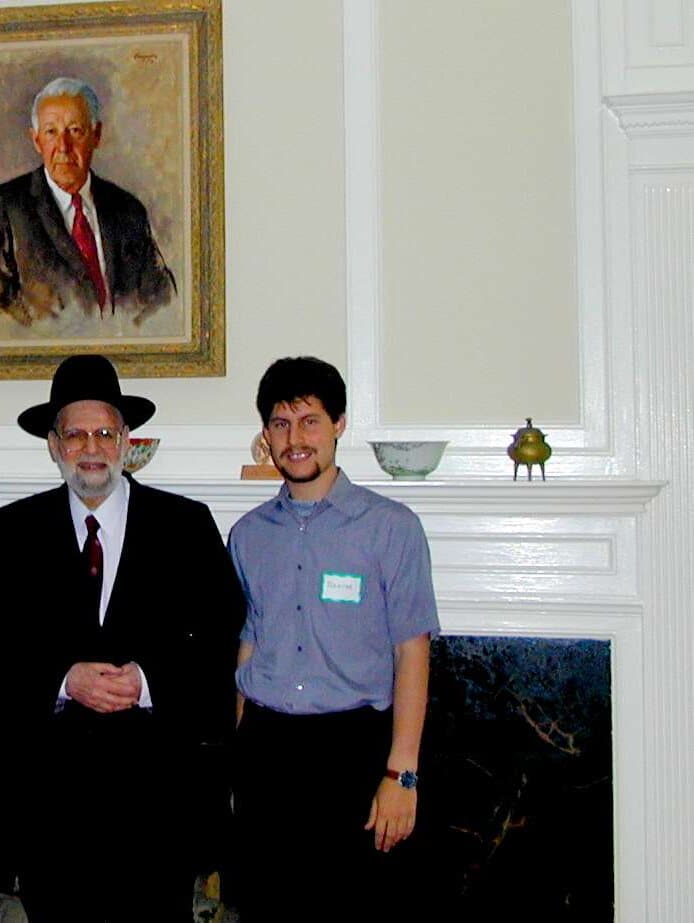
Aus der Entdeckung in Büchern wurden persönliche Begegnungen. In den USA lernte er unter anderem Vernon L. Smith, Israel M. Kirzner und James M. Buchanan kennen. Kirzners Theorie unternehmerischer Entdeckung wurde für das eigene Denken des jungen Physikers besonders wichtig. Die grossen Namen der Ökonomik wurden plötzlich zu Gesprächspartnern mit sehr verschiedenen Temperamenten, Methoden und Antworten.
Das war eine Entdeckung und eine Zumutung. Wie konnte eine Schule, die in Wien entstanden war und von hier aus das ökonomische Denken der Welt verändert hatte, in Österreich nahezu verschwunden sein? An der Wiener Wirtschaftsuniversität gab es noch gelehrte Kenntnis ihrer Geschichte. Als eigenständige, streitbare und weiterzuentwickelnde Wissenschaftstradition war sie jedoch abgerissen. Ihre wichtigsten Vertreter waren vertrieben worden, emigriert oder verstorben. Was in Amerika überlebt hatte, war kostbar, aber bereits aus seinem Wiener Zusammenhang gelöst und oft zu einer politischen Gegenposition verengt.
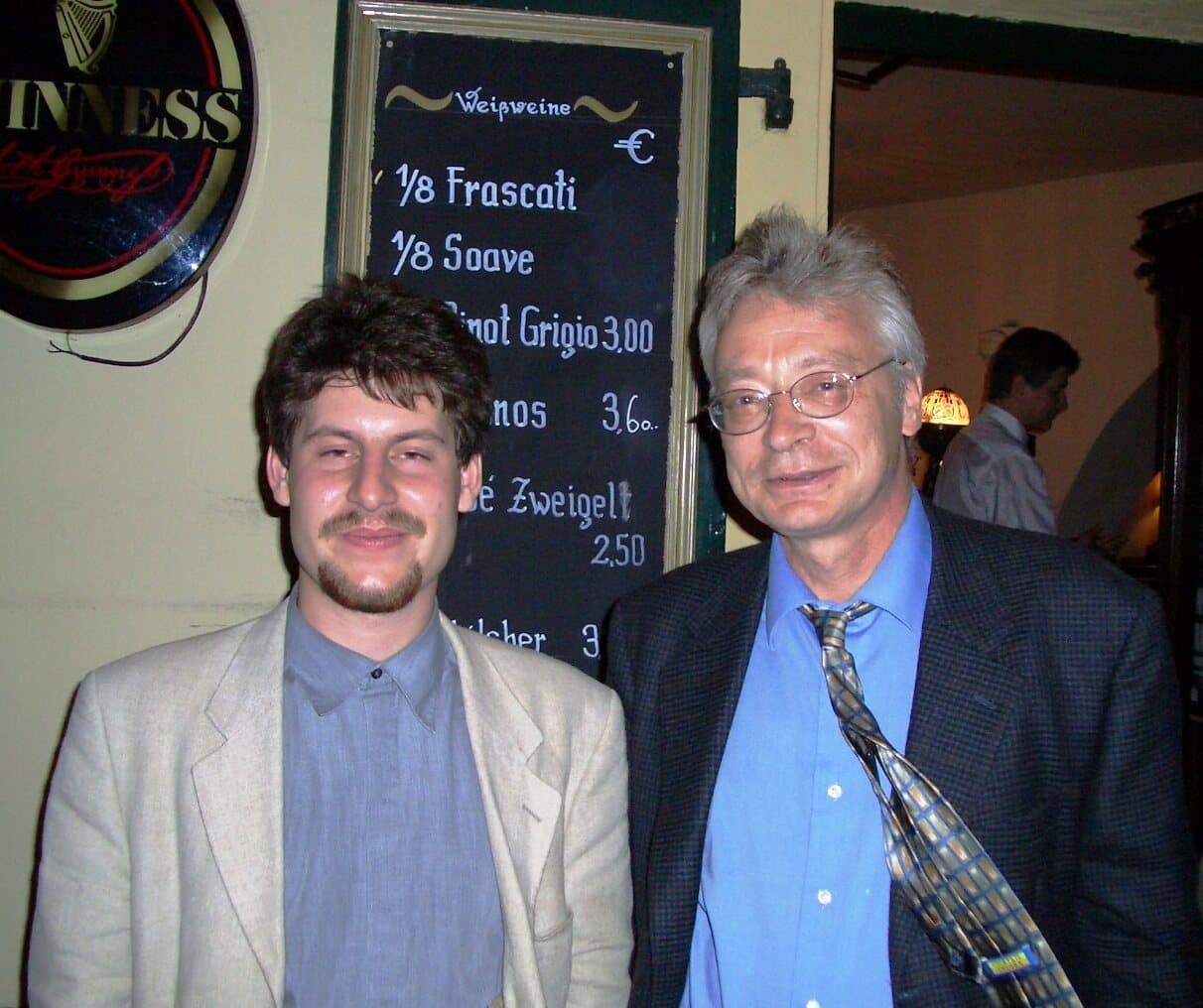
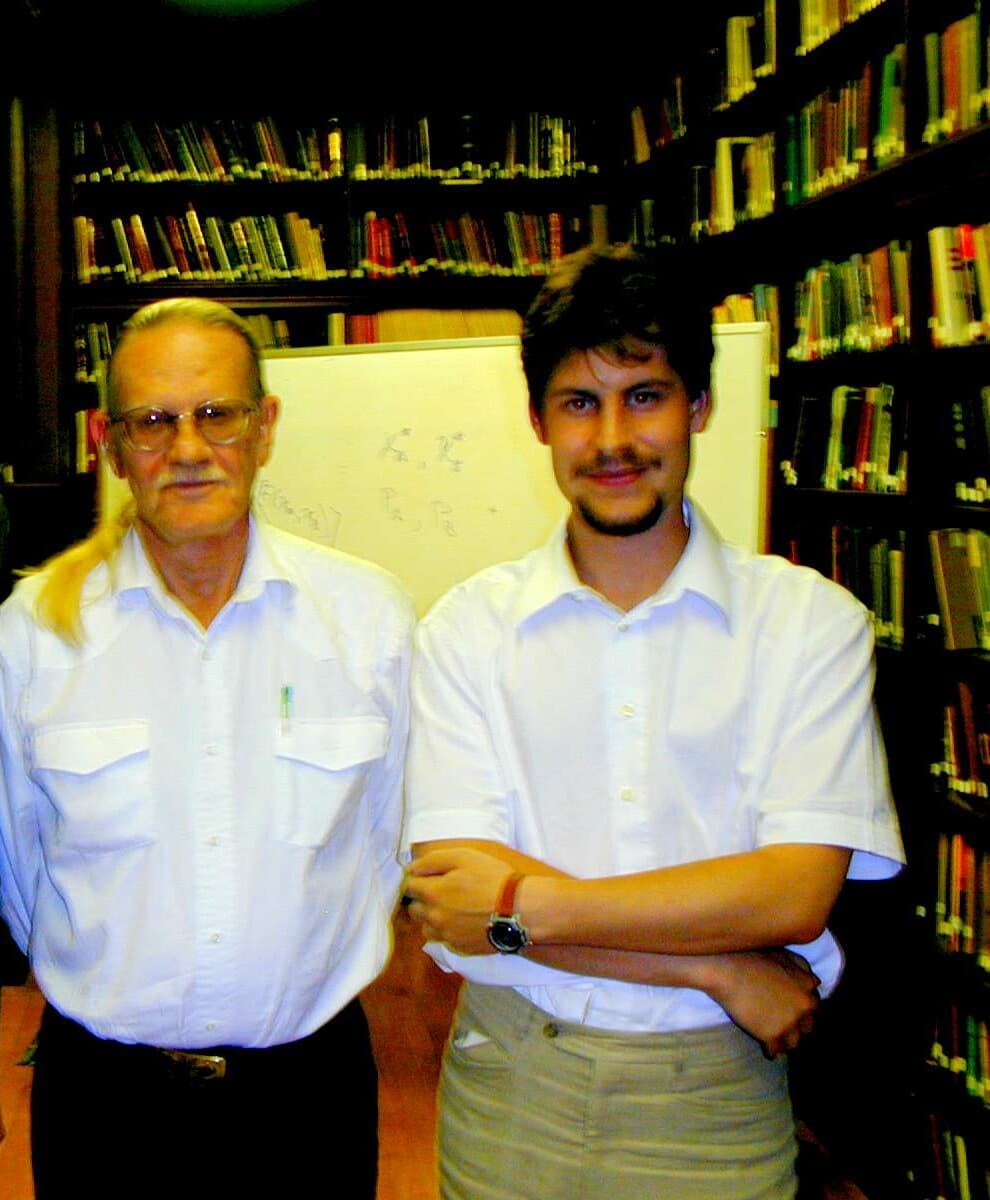
Er begann parallel zur Physik Handelswissenschaften und Soziologie zu studieren. In dieser Zeit wurde Roland Baader zu seinem Lehrer und Mentor. Als unabhängiger Gelehrter ohne Lehrstuhl hatte er ein seltenes Gespür dafür, wo ökonomische Theorie im eigenen Leben Folgen haben muss. Bei ihm gehörten Geldordnung, Vermögensanlage, Charakter und Unabhängigkeit zusammen. Später wurde Hans-Hermann Hoppe zum Lehrer und Mentor des jungen Physikers. Von ihm lernte er die Strenge eines systematischen, realistischen Denkens, das sich weder von akademischen Moden noch von politischer Opportunität beeindrucken lässt.
Baader und Hoppe standen für zwei Seiten, die das scholarium später verbinden sollte: intellektuelle Konsequenz und praktische Konsequenz.
Gründungslinie · 2000–2001
Der Anfang in Drosendorf
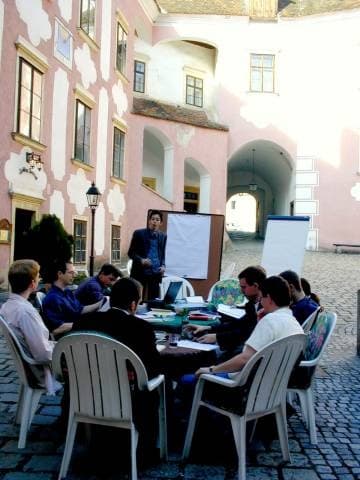
Am 15. Oktober 2000 traf sich eine kleine Gruppe zu einem Frühstück im Wiener Votiv-Kino. Aus diesem Gespräch entstand der Plan für einen F. A. von Hayek-Kreis. Wir wollten herausfinden, ob sich die vergessene Tradition in Österreich wieder ins Gespräch bringen liesse.
Die erste Klausur fand am 30. April und 1. Mai 2001 auf Schloss Drosendorf statt. Gemeinsam mit Julian Rauchdobler moderierte der Gründer die Startklausur. Unser Gast war Friedhelm Frischenschlager, der frühere Bundesminister für Landesverteidigung, Mitbegründer des liberalen Atterseekreises und einer der letzten österreichischen Politiker, die Hayek noch selbst studiert hatten. Im November folgte die zweite Klausur mit Detmar Döring, Gerd Habermann und Robert Nef. Drosendorf wurde zum Gründungsort unserer Initiative.
Es waren keine Massenveranstaltungen. Gerade darin lag ihre Kraft. In einem alten Schloss am Rand Österreichs sassen Menschen zusammen, die wieder ernsthaft über Freiheit, Verantwortung, Ökonomik und die Zukunft Europas sprechen wollten. Vieles, was später das scholarium ausmachen sollte, war dort schon im Keim vorhanden: das Gespräch in einem überschaubaren Kreis, die Verbindung von Geschichte und Gegenwart, die Gastfreundschaft eines wirklichen Ortes und der Mut, eine fast abgerissene Überlieferung wiederaufzunehmen.
Digitale Werkstätten · 2001–2007
Die erste digitale Werkstatt
Das Internet schien damals der ideale Ort für diesen Wiederanfang. Es war ein offenes Feld, noch kaum von wenigen Plattformen bewirtschaftet. Kleine Initiativen konnten mit geringen Mitteln etwas Eigenes aufbauen.
Mit liberalismus.at entstand die erste österreichische Website, die die Denker der Österreichischen Schule in dieser Breite für ein allgemeines deutschsprachiges Publikum erschloss. Für viele Leser wurden Menger, Böhm-Bawerk, Mises und Hayek dort erstmals wieder auf Deutsch zugänglich. Die Seite wuchs zu einem grossen Archiv aus Biografien, Texten, Nachrichten und Kommentaren. Zeitweise erreichte sie 5.000 Leser am Tag.
Doch schon der Name zeigte eine Grenze. Der Begriff Liberalismus war politisch besetzt. Er zog Menschen an, die ein Lager suchten, und stiess andere ab, bevor die eigentlichen Fragen überhaupt beginnen konnten. Aus liberalismus.at wurde liberty.li. Der Schritt von einem deutschen politischen Etikett zu einem international verständlichen Begriff war zugleich ein geistiger Schritt. Freiheit wurde zur offenen Frage, die sich nur gemeinsam mit Verantwortung, Erfahrung und konkretem Handeln untersuchen liess.
liberty.li war soziale Vernetzung, bevor von sozialen Medien die Rede war. Die Plattform verband Profile, Gruppen, Foren, Kommentare, Weblogs und die Finanzierung gemeinsamer Projekte. Sie wurde ins Englische und Französische übersetzt; eine slowakische Fassung war in Arbeit. Die Plattform trug sich durch Werbeeinnahmen selbst.
Im Verbund dieser Plattformen war sogar ein digitales Goldsystem eingebaut. Guthaben wurden in Gramm Gold geführt; Einzahlungen, Auszahlungen, Einlösungen und Übertragungen zwischen Teilnehmern waren möglich. Es war ein zentral geführtes, datenbankbasiertes Konten- und Transaktionsbuch, verwandt mit frühen digitalen Goldsystemen wie e-gold, keine Blockchain. Dennoch existierte es Jahre vor dem Bitcoin-Whitepaper. Wir nannten die Rechnungseinheit Gulden. Das System war technisch integriert, wurde aber nie breit lanciert. Auch das gehört zur Geschichte: Manche Dinge erkannten wir früh, gelegentlich zu früh, um selbst schon alle Konsequenzen zu ziehen.
Mit choices.li folgte der nächste Lernschritt. An die Stelle der Lagerzugehörigkeit trat die Frage nach den realen Wahlmöglichkeiten eines Menschen. Wie lässt sich ein eigenständiges Leben aufbauen? Welche Rolle spielen Wohnort, Unternehmen, Vermögen, Bildung, Gesundheit und persönliche Beziehungen? Wie kann man Risiken über mehrere Länder und Rechtsräume verteilen?
Damit entstand sehr früh ein praktisches Labor für internationale Lebensoptionen, Mehrflaggenstrategien und Geoarbitrage. Wir boten Beratung zu Auswanderung, Unternehmertum, Vermögensgestaltung und alternativen Lebensmodellen an, lange bevor daraus eine eigene Branche wurde. Christoph Heuermann gehörte als junger Schüler und späterer Mitarbeiter zu diesem Umfeld. Mit Staatenlos entwickelte er die Mehrflaggen-Thematik weiter.
Der wichtigste Ertrag dieser Jahre war jedoch eine Korrektur. Digitale Reichweite ist noch keine Gemeinschaft. Vernetzung kann Menschen verbinden, aber ebenso in Filterblasen sammeln, ihre Entfremdung verstärken und das Gefühl politischer Ohnmacht vergrössern. Am Höhepunkt der Reichweite nahm der Gründer die Plattform vom Netz. Der Freiheit blieb er treu. Verabschiedet hatte er sich von der Vorstellung, sie liesse sich als Ideologie vermarkten.
Digitale Reichweite ist noch keine Gemeinschaft.
Institution · 2006
2006: Aus der Initiative wird ein Institut
Im Jahr 2006 gründete Rahim Taghizadegan aus der Initiative das Institut für Wertewirtschaft. Sein sperriger Name war Absicht. Er sollte sich den üblichen politischen Zuordnungen entziehen und zugleich daran erinnern, dass Wirtschaft mit Werten beginnt: mit dem, was Menschen wichtig ist, wofür sie Verantwortung übernehmen und worin sie anderen dienen können.
Das Institut war kein Thinktank, der fertige Antworten mit dem Geld eines politischen Auftraggebers verbreitete. Es wurde privat und von seinen Kunden finanziert, ohne Subventionen. Von Anfang an arbeitete es unternehmerisch; sein Gründer trug dafür die Verantwortung. Die Menschen sollten für ihre Unterstützung einen wirklichen Gegenwert erhalten: bessere Entscheidungen, tiefere Einsichten und, wo es um Vermögen ging, konkreten Schutz vor vermeidbaren Fehlern.
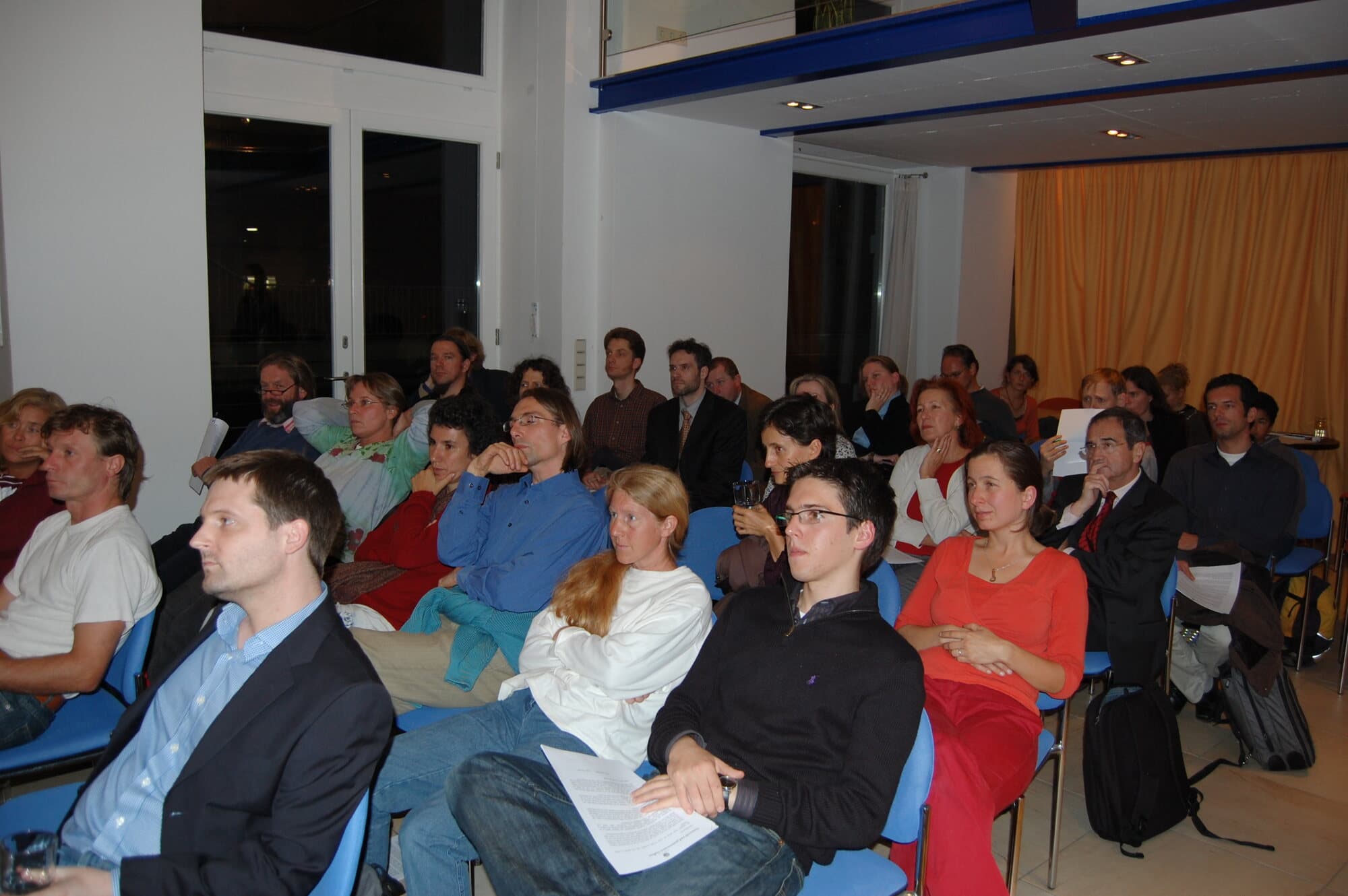
Ab 2006 veranstalteten wir Seminare für Anleger. Wir erkannten die Fragilität des Finanzsystems, die Verzerrungen durch billiges Geld und die Gefahr einer grossen Korrektur. Den exakten Tag eines Börsensturzes konnte niemand seriös vorhersagen. Die Mechanismen der kommenden Krise liessen sich jedoch verstehen. Als die Korrektur 2007 und 2008 einsetzte, waren viele unserer Teilnehmer vorbereitet. Ihre Rückmeldungen zeigten, dass die Schulungen nicht bloss intellektuell interessant gewesen waren: Sie hatten geholfen, Ersparnisse und Vermögen zu bewahren.
Bildung war dabei nicht bloss ein späteres Nebenfeld. Zum Clubabend „Bildungsfreiheit statt Einheitsschule“ am 7. September 2007 waren Familien, Homeschooler und Freilerner eingeladen; Kinder waren selbstverständlich Teil der Veranstaltung. Die Frage, wie Lernen jenseits eines Einheitsschemas gelingen kann, führte Jahre später zu CRAFTprobe und schliesslich zum Studium Generale.
Diese Erfahrung prägte das scholarium dauerhaft. Gute Theorie beweist sich nicht darin, dass sie nachträglich alles erklären kann. Sie muss Menschen vor einer Entscheidung helfen, Ungewissheit besser zu tragen.
Lehre · 2007–2012
Die Wiener Schule kehrt an die Hochschule zurück
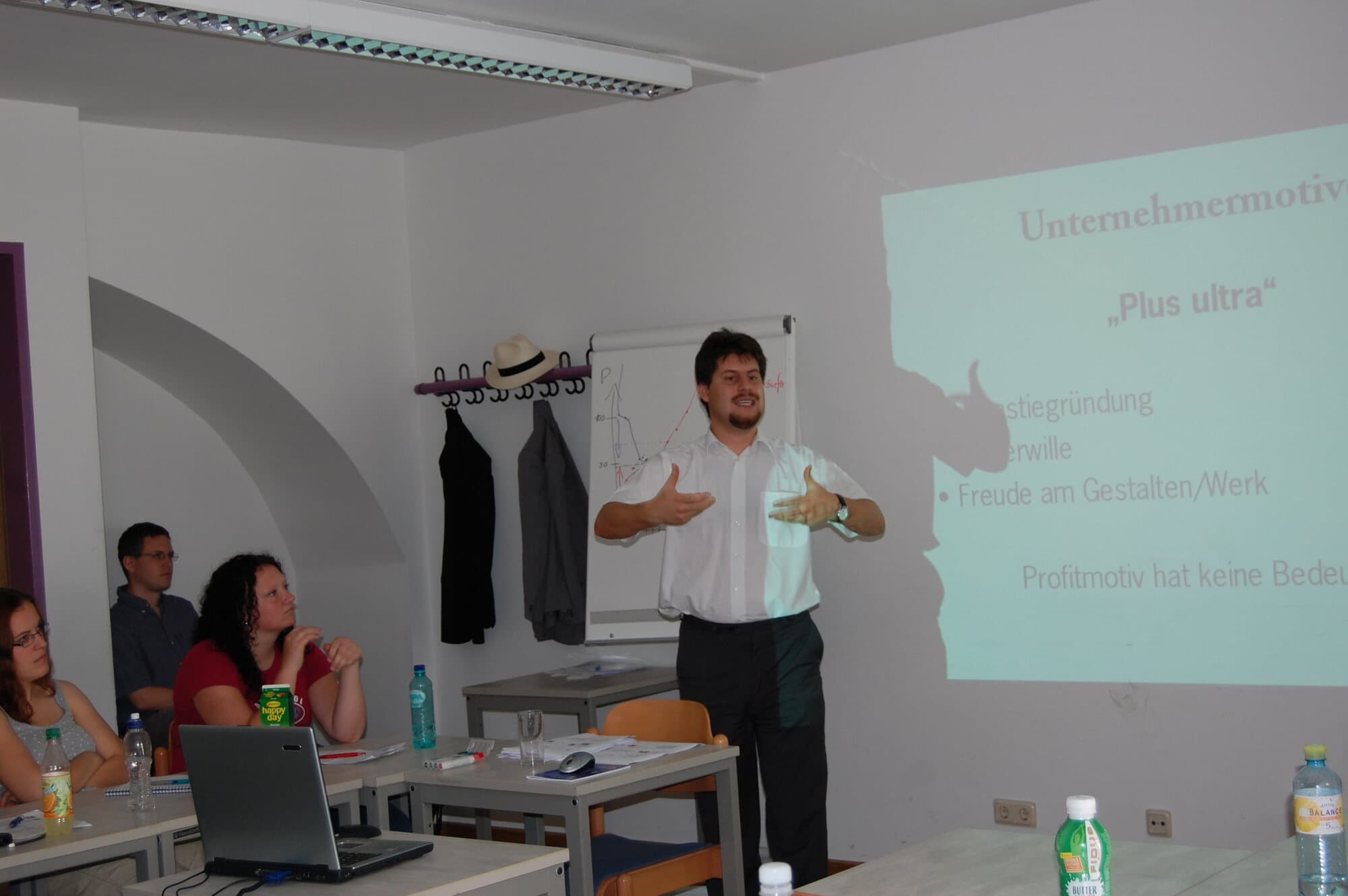
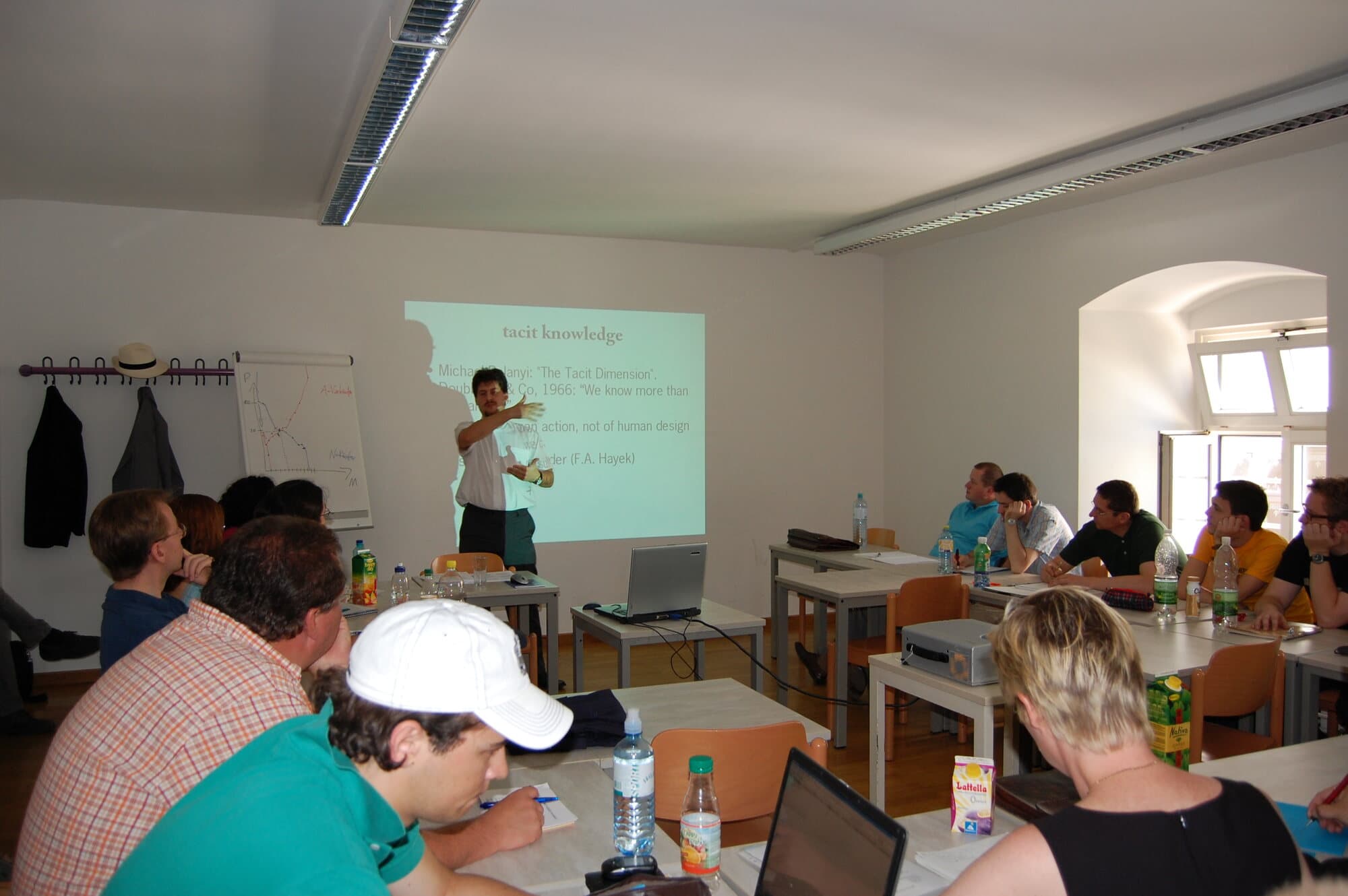
Bereits im Juli 2007 fand das dreitägige Seminar „Wirtschaft wirklich verstehen“ an der WU Wien statt. Drei Tage lang behandelte das Seminar die Österreichische Schule als Werkzeug, um Unternehmertum, Preise, Wissen und menschliches Handeln zu verstehen.
Mit dem Institut begann eine wachsende Lehr- und Vortragstätigkeit. Der Gründer lehrte an zahlreichen Universitäten und Hochschulen im In- und Ausland, unter anderem in Wien, Halle, Liechtenstein und Heiligenkreuz. An der Wirtschaftsuniversität Wien hielt er von 2008 bis 2012 die Lehrveranstaltung „Der handelnde Mensch in der Wirtschaftstheorie“. Lehraufträge an Universitäten und Hochschulen begleiten die Arbeit bis heute.
Damit kehrte die Österreichische Schule an einen Ort zurück, an dem ihre Vertreter einst gelehrt hatten. Rund acht Jahrzehnte nach der Blüte ihrer ursprünglichen Wiener Tradition wurde sie wieder als eigenständiger, handlungsorientierter Zugang unterrichtet, nicht bloss als Kapitel der Dogmengeschichte. Später fanden unsere Seminare „Wirtschaft wirklich verstehen“ auch im Gebäude der ehemaligen Hochschule für Welthandel statt. Gerade dort war spürbar, was auf dem Spiel stand: die Rückkehr einer Ökonomik, die den Unternehmer, das Wissen, die Zeit, den Irrtum und die Ungewissheit ernst nimmt.
Aus diesen Lehrveranstaltungen und Seminaren wuchs Wirtschaft wirklich verstehen. Statt mathematischem Glasperlenspiel oder politischer Rezeptsammlung sollte Ökonomik zeigen, wie Menschen unter Knappheit handeln, Preise Wissen vermitteln, gute Absichten schlechte Folgen haben können und Unternehmertum mit Ungewissheit umgeht.
Die Lehre blieb nie auf die Österreichische Schule begrenzt. Psychologie, Recht, Geschichte, Technik, Anthropologie, Geldtheorie und Kultur gehörten dazu. Diese Verbindung ist bis heute der Kern: Die Stärke der Österreichischen Schule liegt in einem realistischen Blick auf menschliches Handeln, der die künstlichen Grenzen zwischen diesen Gebieten durchlässig macht.
Neugründung · 2015
Vom Institut zum lernenden Unternehmen
2015 ging das Institut für Wertewirtschaft im scholarium auf. Der neue Name war eine Selbstkorrektur und ein Programm. Die universitas magistrorum et scholarium war ursprünglich eine Gemeinschaft von Lehrenden und Lernenden. Moderne Universitäten hatten sich immer stärker auf die Magister, Titel, Zertifikate und Zuständigkeiten konzentriert. Das scholarium sollte den zweiten Teil wieder ernst nehmen: die Lernenden.
Statt anderen zu erklären, wie sie zu leben oder zu wirtschaften hätten, sollte das scholarium selbst ein lernendes Unternehmen sein. Theorie ohne Praxis bleibt leer. Praxis ohne Theorie wird blind für die Verzerrungen der Gegenwart. Erst in ihrer Verbindung entsteht jene Urteilskraft, die weder aus einem Lehrbuch noch aus blosser Erfahrung allein gewonnen werden kann.
Das kaufmännische &, das dem scholarium lange vorangestellt war, brachte diese Idee ins Zeichen. Es ist eine alte Ligatur aus dem lateinischen et, dem Wort für „und“. Es verband die Welt der Gelehrten mit der Welt der Kaufleute, Musse mit Arbeit, Bücher mit Problemen, Wien mit der Welt. Ein Satz Roland Baaders blieb dafür eine gute Kurzform: „Wirtschaft verbindet, Politik trennt.“
Bildungspraxis · 2012–2020
CRAFTprobe: lernen, bevor man sich festlegt
Aus dieser Idee entstand CRAFTprobe, ein Bildungsprogramm für junge Menschen. Viele Jugendliche sollten sich für einen Ausbildungsweg entscheiden, ohne je erfahren zu haben, wie sich die verschiedenen Arten wirklicher Arbeit anfühlen. Sie kannten Schulfächer und Berufsbilder, aber kaum Werkstätten, Unternehmen, Projekte und Menschen, die etwas mit grosser Meisterschaft taten.
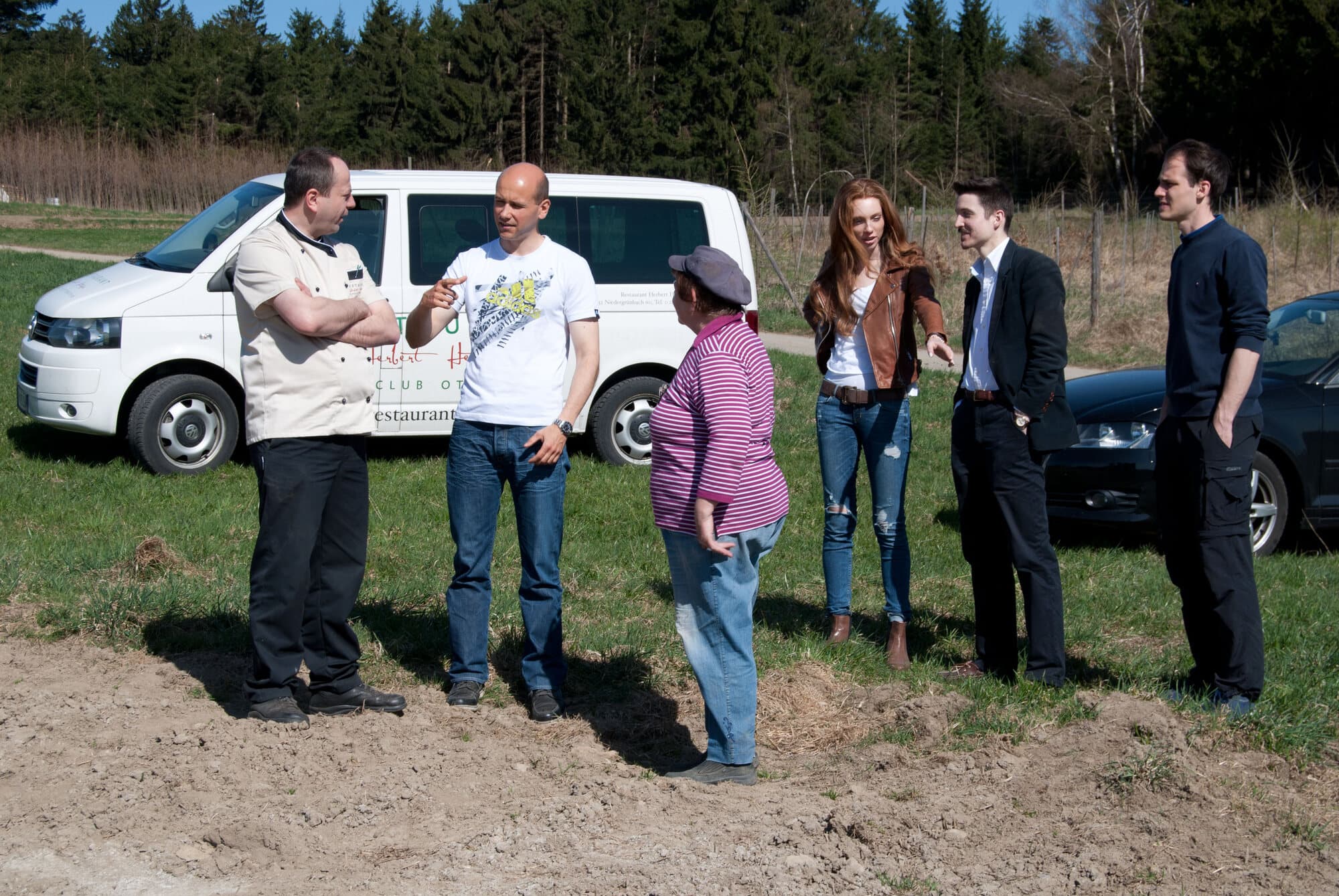
Eine frühe Vorstufe war die Akademie für Eigenverantwortung in Hittisau, Vorarlberg. Vom 16. bis 23. September 2012 verbrachten junge Menschen zwischen 17 und 25 Jahren dort eine intensive Woche, in der ökonomische, philosophische und praktische Fragen eines eigenständigen Lebens zusammenkamen.
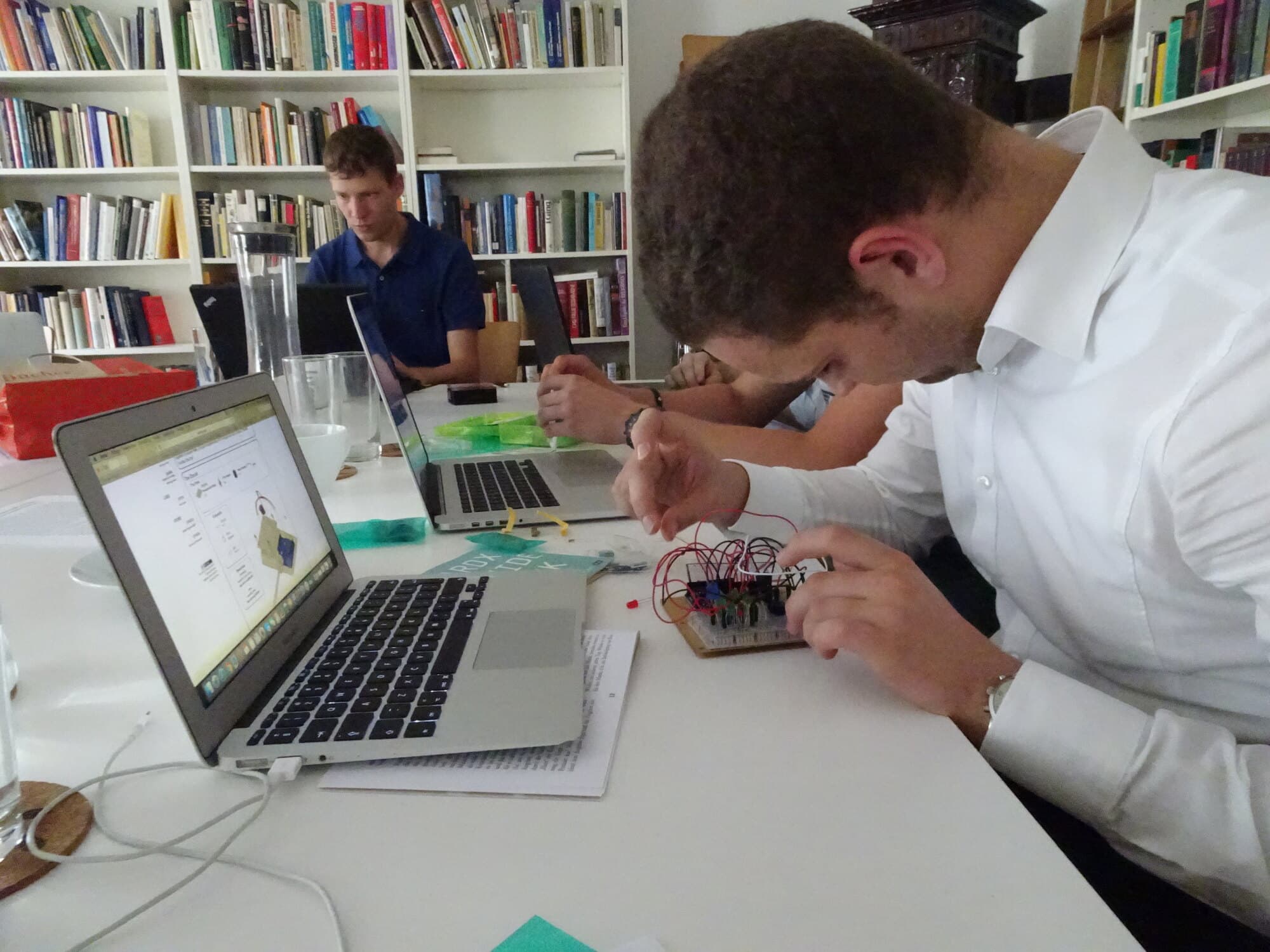
CRAFTprobe setzte genau dort an. Junge Menschen konnten praktisch in unterschiedliche Berufsfelder hineinschnuppern, eigene Projekte übernehmen und unternehmerische Grundfertigkeiten erwerben. Digitale und analoge Werkzeuge, Kultur, Natur, Technik, Kunst, Markt und persönliche Entwicklung gehörten zusammen. Unternehmer, Handwerker, Künstler und Fachleute wurden zu unmittelbaren Vorbildern. Die gute Theorie blieb dabei unverzichtbar. Sie half, aus Erfahrungen mehr zu gewinnen als eine Sammlung von Anekdoten.
Das Programm war als Kraftprobe im besten Sinn gedacht: als geschützter, aber realer Übergang in ein eigenständiges Leben. Im zweiten Intensivprogramm im August 2016 nahmen fünfzehn junge Menschen teil. Die Pandemie unterbrach diese physische Form. Ihre Grundidee ging jedoch nicht verloren. Sie lebt im scholarium weiter: Lernen beginnt dort, wo Menschen etwas versuchen, für die Folgen einstehen und gemeinsam über das Erlebte nachdenken.
Jubiläum · 2016
Zehn Jahre und ein sehr altes Buch
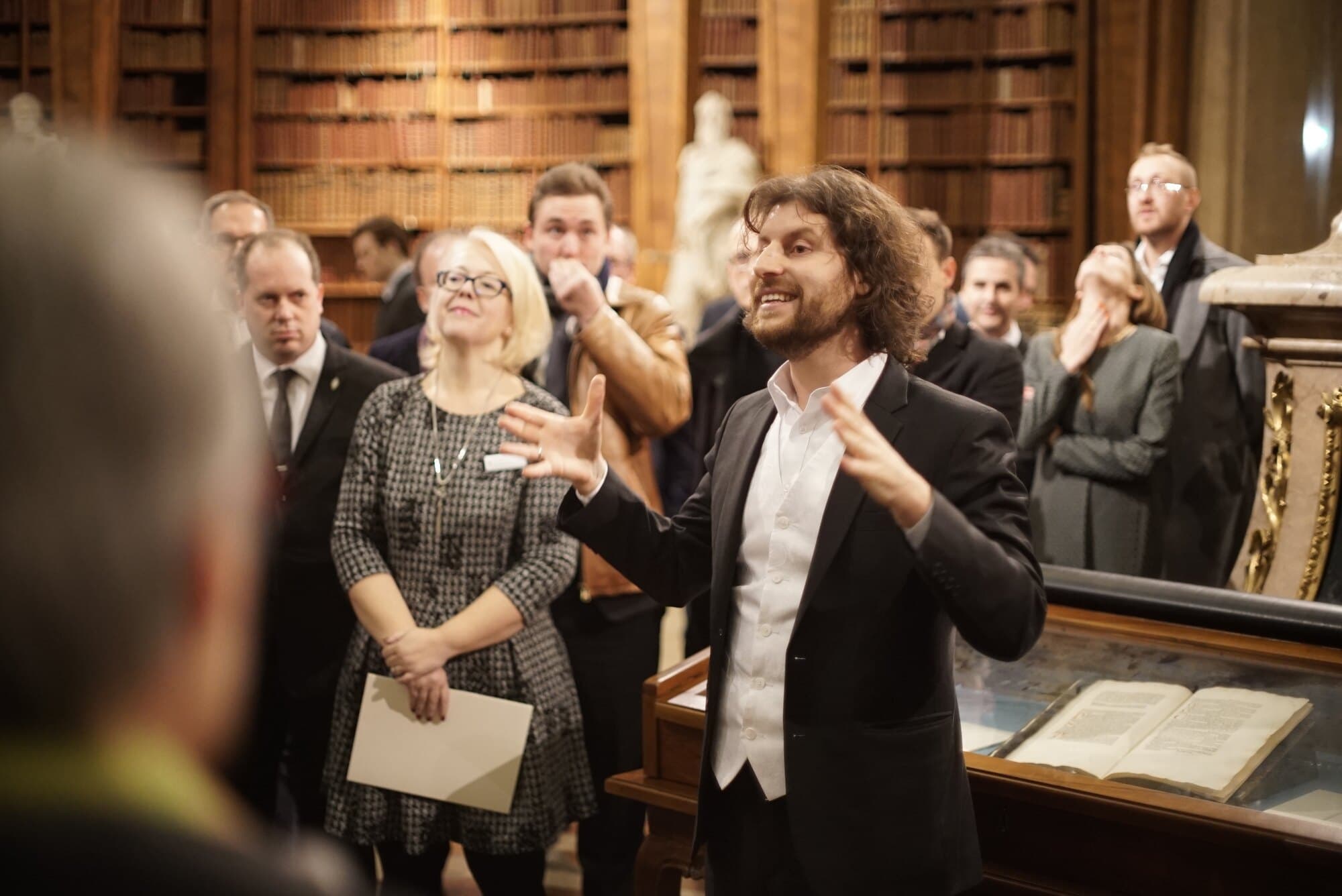
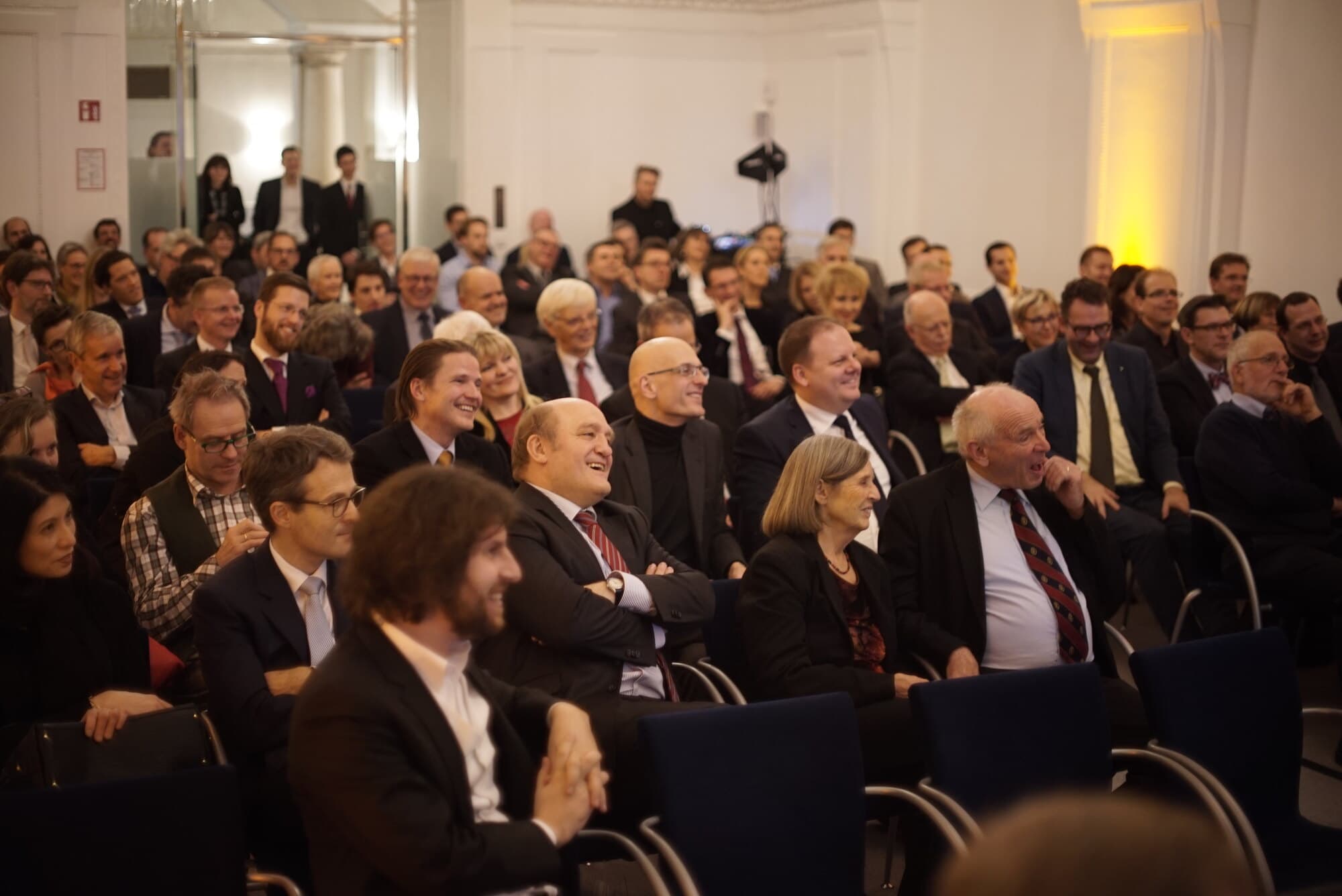
Am 3. Dezember 2016 feierten wir das zehnjährige Bestehen in der Österreichischen Nationalbibliothek. Im Prunksaal, Augustinerlesesaal und Oratorium kamen Weggefährten aus vielen Ländern zusammen, darunter Hans-Hermann Hoppe, Jörg Guido Hülsmann, Robert Nef und Daniel Model. Aus dem kleinen Anfang war eine privat finanzierte Hochschule mit Studenten und Gästen aus aller Welt geworden.
Das Jubiläum blickte zugleich weit zurück. Ein Projekt widmete sich Johannes Niders De Contractibus Mercatorum, einer im 15. Jahrhundert entstandenen Abhandlung über die Verträge der Kaufleute. Darin finden sich erstaunlich frühe Überlegungen zu Bedürfnissen und Preisen, Geldwert, Zeit, Unternehmergewinn, Eigentum und Vertrag. Das Original wurde fachmännisch restauriert und wird in der Nationalbibliothek für die Forschung aufbewahrt.
Auch das ist eine typische scholarium-Geschichte: Ein Zukunftsproblem führte zu einem fast vergessenen Manuskript, und das alte Manuskript erwies sich als erstaunlich gegenwärtig.
Publikationen · 2007–heute
Bücher, Übersetzungen und Scholien
Was in Seminaren und Gesprächen entstand, wurde über die Jahre zu einem grossen schriftlichen Werk. Mehr als fünfzehn Bücher erschienen unter dem Namen des Gründers oder in Koautorschaft, darunter Vom Systemtrottel zum Wutbürger, Österreichische Schule für Anleger, Alles, was Sie über die Österreichische Schule wissen müssen, Wirtschaft wirklich verstehen, Die Nullzinsfalle, Geld her oder es kracht und Europa auf der Intensivstation.
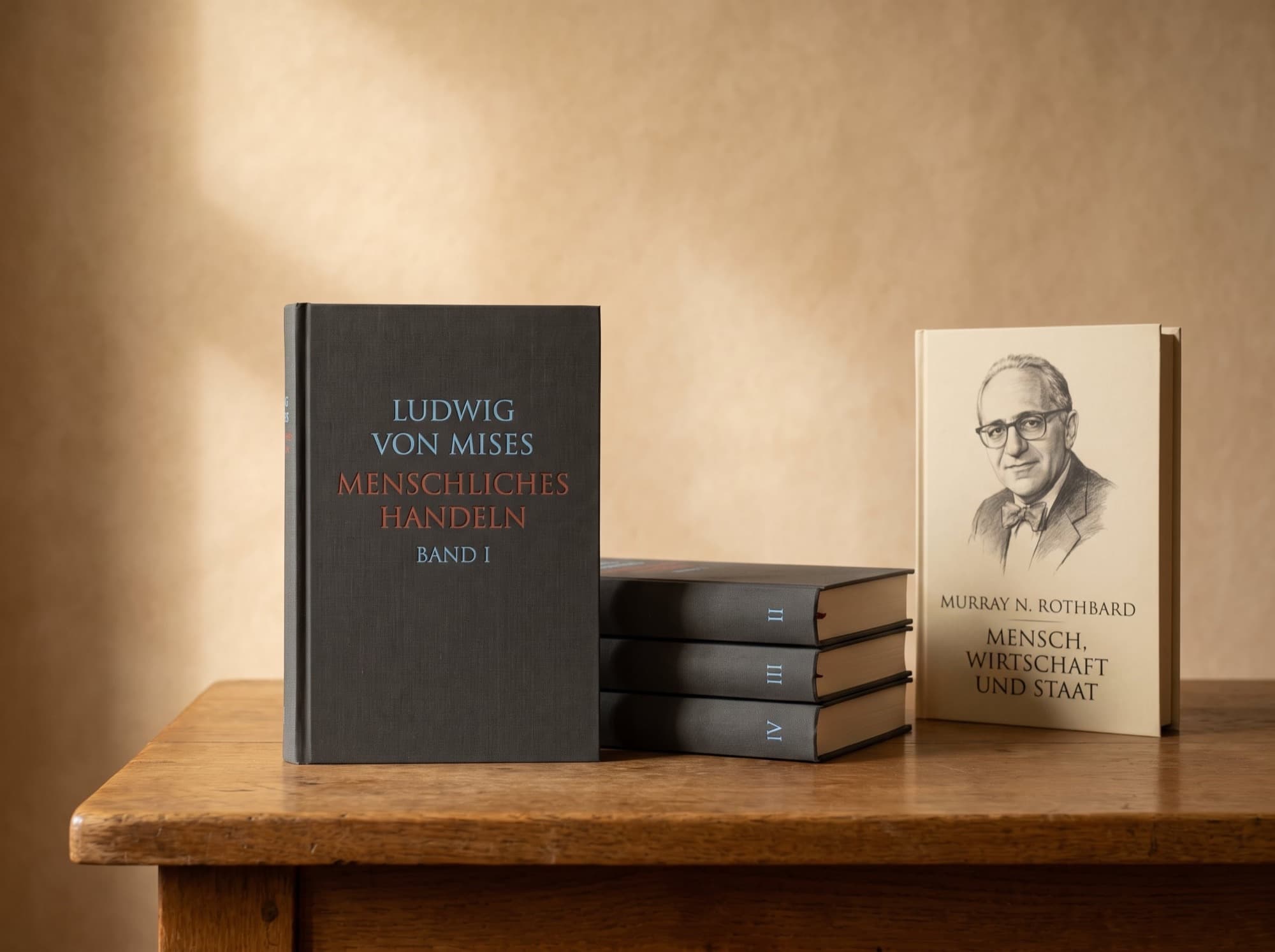
Dazu kamen Übersetzungen, Einführungen und Herausgaben. Besonders wichtig war seine deutsche Gesamtausgabe von Mises' Human Action, die 2019 in vier Bänden als Menschliches Handeln erschien. Weitere Arbeiten machten Texte zugänglich, die im deutschsprachigen Raum kaum noch greifbar waren. Übersetzen bedeutete hier mehr, als Wörter von einer Sprache in eine andere zu bringen: einen abgerissenen Gedankenfaden wieder aufzunehmen.
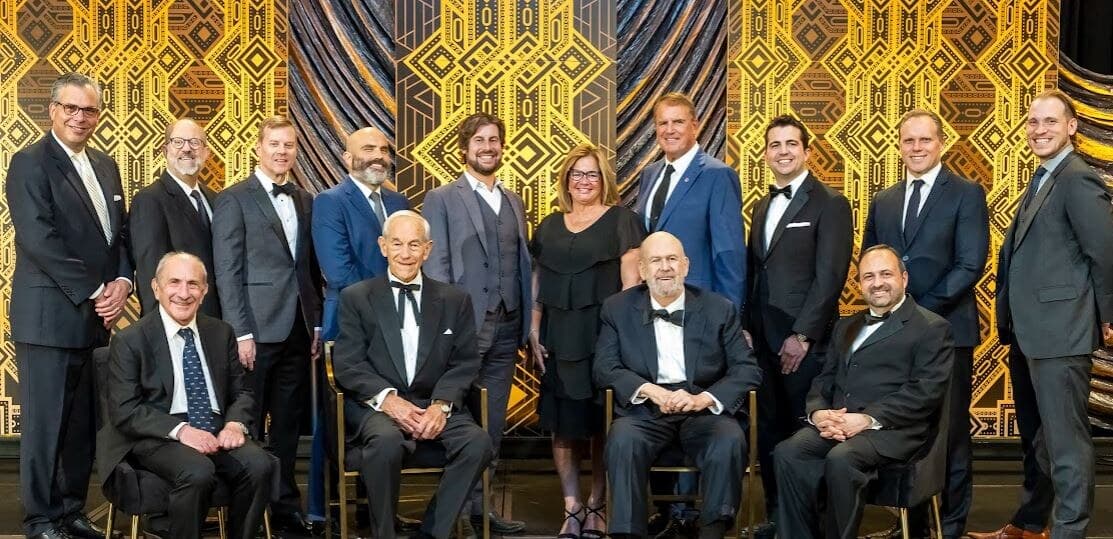
Die schriftliche Arbeit führte immer wieder zurück ins internationale Gespräch. Am 7. Oktober 2022 sprach er beim 40-Jahre-Gipfel des Mises Institute in Phoenix über das Erbe der Österreichischen Schule in Wien. Mehr als zwanzig Jahre nach seiner eigenen Entdeckung in Amerika war aus dem staunenden Besucher ein Wiener Vortragender geworden, der nun etwas von dieser Tradition zurückbringen konnte.
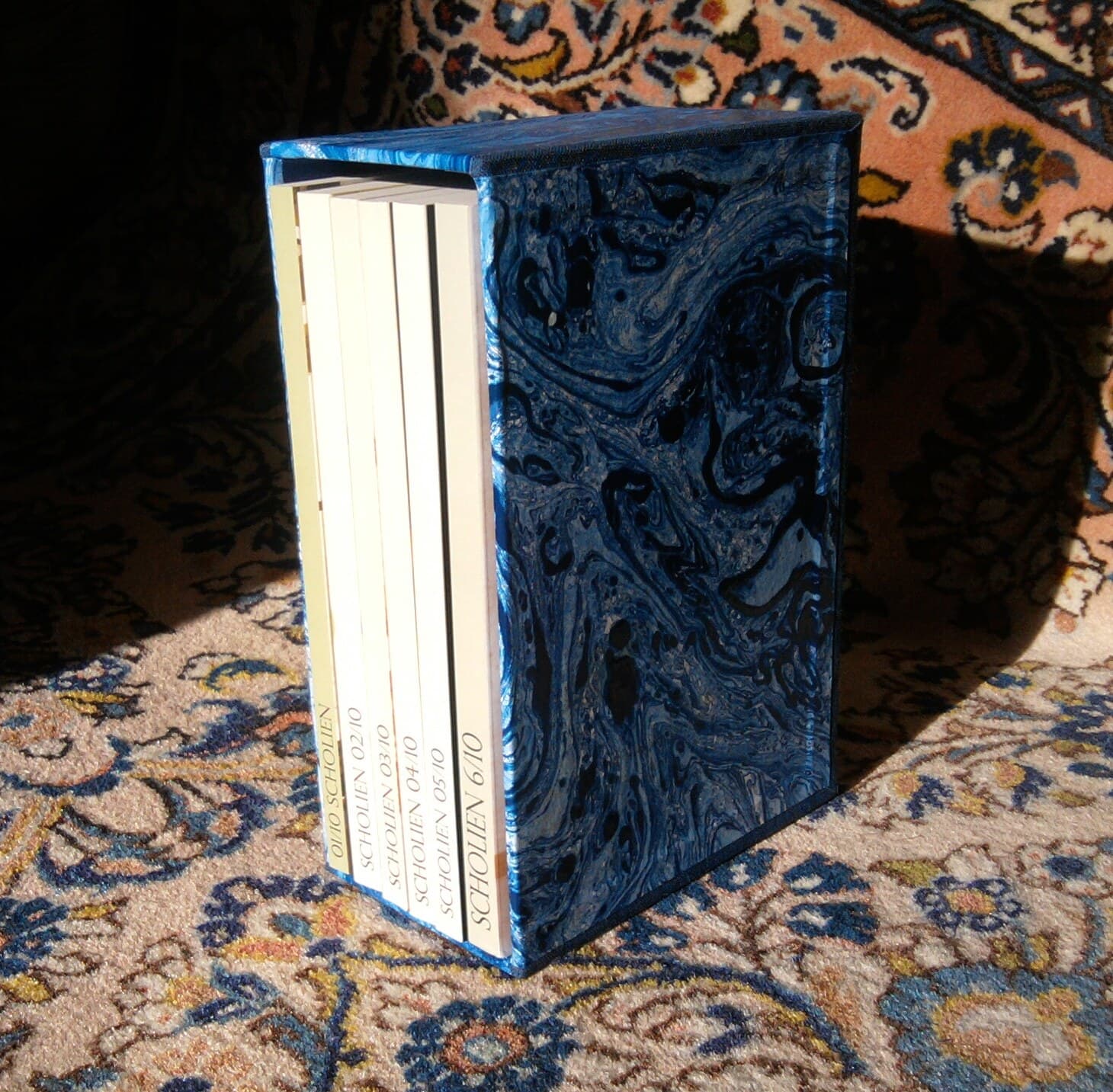
Seit 2009 erschienen die Scholien: gedruckte Randbemerkungen zu einem grossen, unsichtbaren Text, mit Beobachtungen, Fragen, Essays, Buchempfehlungen, Begegnungen und Einsichten. Über viele Jahre kamen sie als Hefte und Büchlein mit der Post, ein bewusst langsames Medium in einer Zeit wachsender digitaler Ablenkung. Später wurden sie digital fortgeführt, ohne den Anspruch auf Verdichtung aufzugeben.
Früh beschäftigte sich der Gründer auch mit Bitcoin. Seit 2009 beobachtete er das Experiment; ab 2011 brachte er es in die universitäre Lehre ein, zu einer Zeit, als es selbst unter Ökonomen fast unbekannt war. Jahre sollten vergehen, bis das Thema an Universitäten üblich wurde. 2012 veröffentlichte er einen frühen deutschsprachigen ökonomischen Essay darüber, 2018 erhielt Bitcoin ein eigenes Kapitel in der erweiterten Ausgabe von Wirtschaft wirklich verstehen. Bitcoin war für ihn ein Realexperiment zu Geld, Eigentum, Vertrauen, Technik und institutioneller Evolution. Wieder verband sich ein abstraktes Thema mit einer praktischen Entscheidung.
Bibliothek · seit 2012
Die Bibliothek als Gedächtnis und Werkstatt
In Wien wuchs unterdessen eine der grössten privaten Bibliotheken zur Österreichischen Schule und zum Liberalismus. Teile der Bestände von Roland Baader, Hans-Hermann Hoppe und Rainer Ernst Schütz fanden im scholarium eine neue Heimat. Hinzu kamen seltene Ausgaben und weitere Nachlässe.
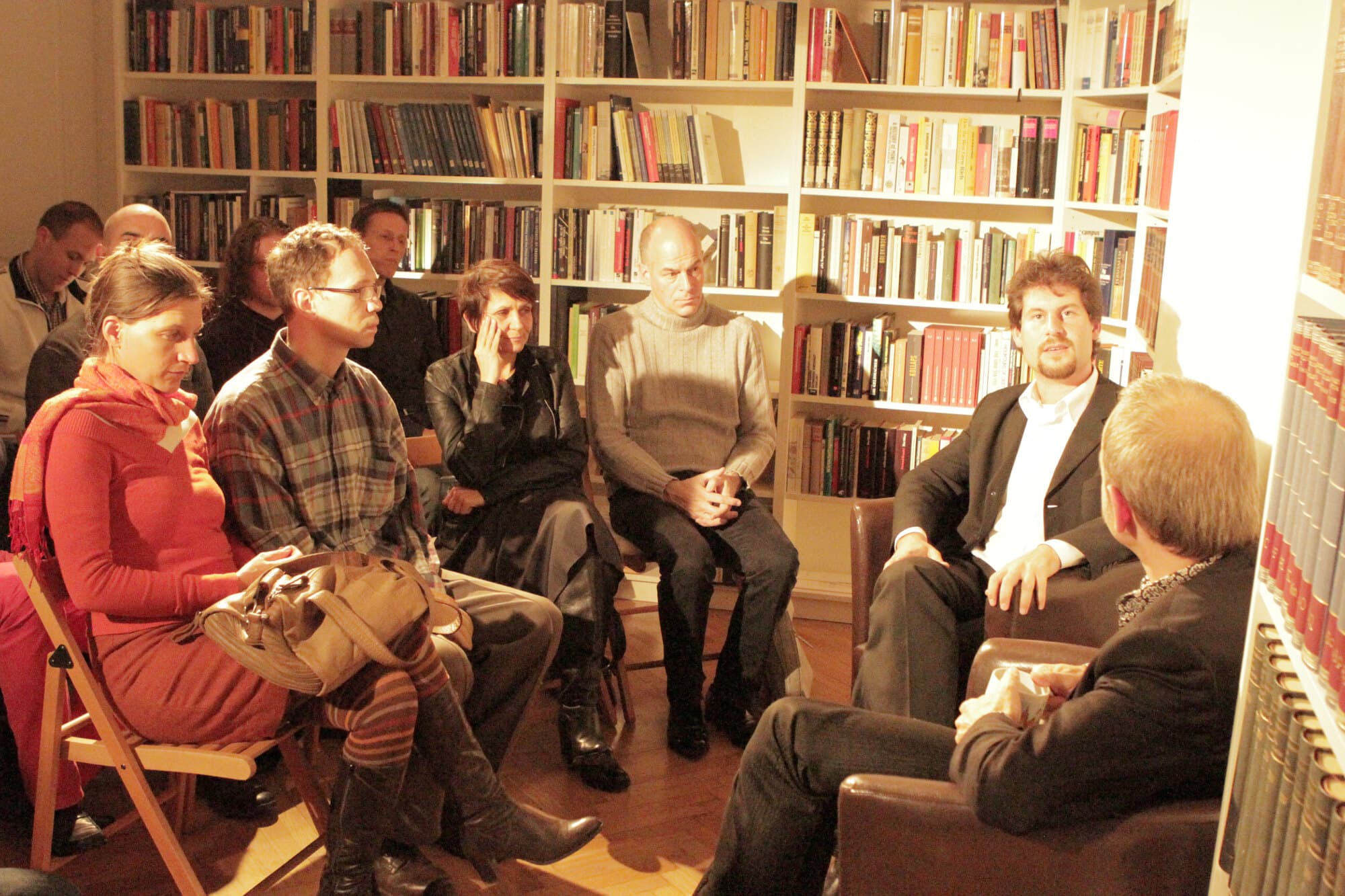
Diese Bibliothek war Arbeitsgerät und Gedächtnis, kein repräsentatives Möbel. Zwischen ihren Regalen fanden Salons, Seminare und lange Gespräche statt. Bücher, die andernorts im Magazin verschwanden, lagen auf dem Tisch und wurden wieder Teil eines lebendigen Diskurses. Zugleich erinnerte der Ort daran, dass Erkenntnis eine materielle Seite hat: Jemand muss Bücher sammeln, bewahren, ordnen, lesen und für kommende Leser zugänglich halten.
Studium Generale · seit 2020
Ein Studium beginnt und wird über Nacht digital
Aus den physischen Salons und Seminaren in dieser Bibliothek entstand das Studium Generale. Die erste Einheit fand am 6. März 2020 statt. Das Programm war als interdisziplinäres Studium für Erwachsene gedacht, anspruchsvoll und diskursiv, ohne Prüfungsritual und Zertifikatszwang.
Kaum hatte es begonnen, machte die Pandemie die physische Fortsetzung unmöglich. Bereits am 27. März wagten wir das Experiment eines Fernstudiums. Was andernorts als jahrelanges Digitalisierungsprojekt geplant worden wäre, entstand bei uns in wenigen Wochen aus der Notwendigkeit. Die Gespräche gingen weiter, wurden aufgezeichnet und bildeten nach und nach ein umfangreiches Archiv.
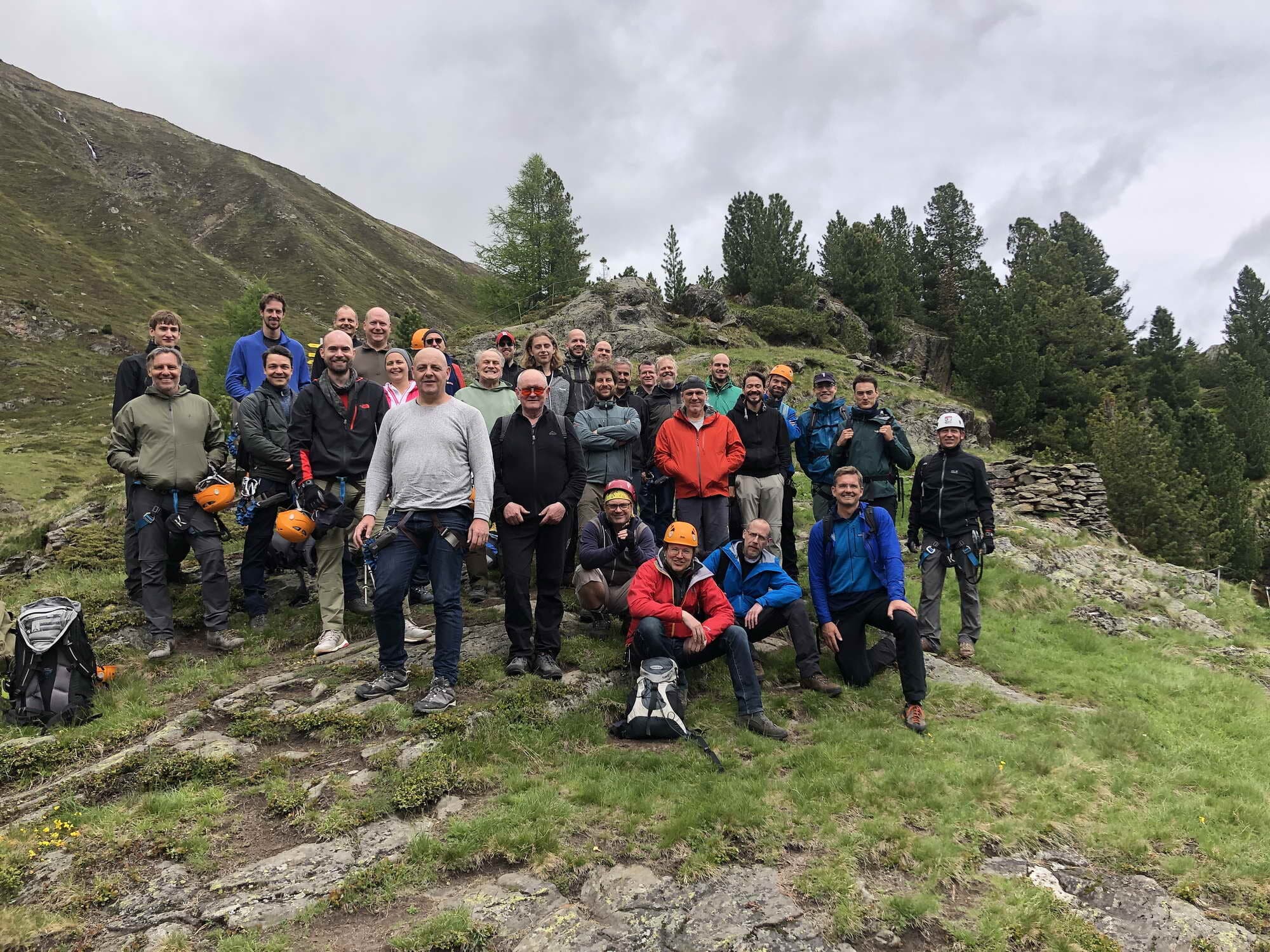
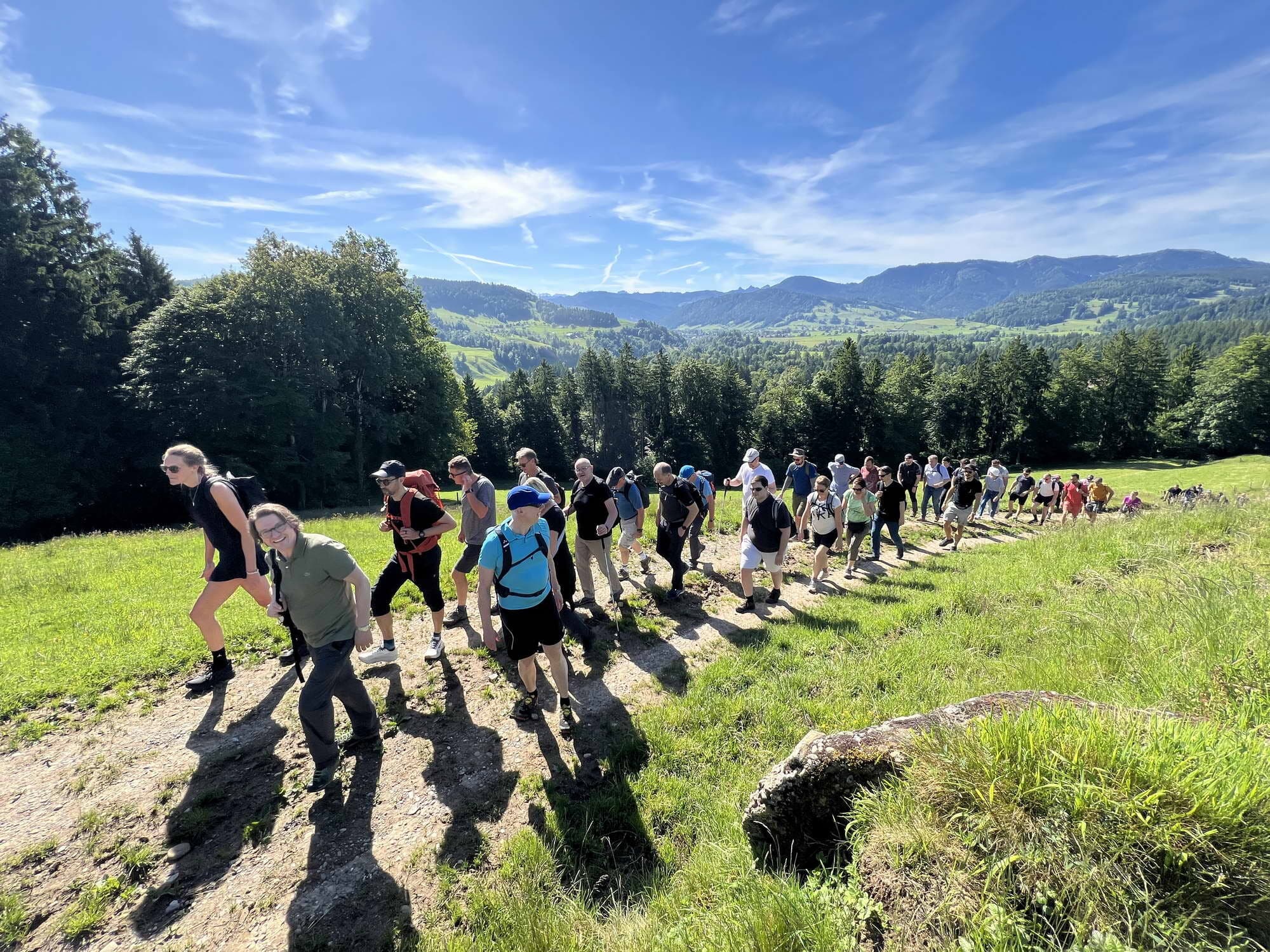
Seit 2022 bringt der AlpenSalon das Studium regelmässig wieder in eine gemeinsame physische Erfahrung. Mehrtägige Seminare in Obergurgl, Salzburg, Neustift und am Ägerisee verbanden Vorträge und Gespräche mit Wanderungen, Bergpraxis und dem Leben an einem gemeinsamen Ort. So blieb auch das digital gewachsene Studium an wirkliche Landschaften und Begegnungen rückgebunden.
Seit 2024 findet das Studium fast ausschliesslich digital statt. Aus dem Fernformat wächst heute eine Bildungsbibliothek, in der Video, Audio, Text und strukturierte Wissensmodelle zusammengeführt werden. Der digitale Raum bewahrt und verdichtet das persönliche Gespräch und öffnet es für Menschen, die über Länder und Zeitzonen verteilt sind; ersetzen kann er es nicht.
Damit schloss sich ein Kreis. Das Internet, das schon liberalismus.at, liberty.li und choices.li möglich gemacht hatte, wurde wieder zum Werkzeug. Im Mittelpunkt stand nun ein über Jahre gewachsener Zusammenhang. Reichweite war ihm nachgeordnet.
Orte · Wien, Zug, Istrien, Madeira, Nova Scotia
Von Wien nach Zug und an wirkliche Orte
Das scholarium blieb nie nur ein Bildungsangebot. Aus seinem Kreis entstanden Unternehmensgründungen, eigene Vermögensentscheidungen und Beteiligungen. Aus der operativen Bildungsarbeit der scholarium GmbH in Wien entstand 2024 mit der scholarium AG in Zug eine Gruppen- und Kapitalebene. Auch hier ging es um dasselbe Prinzip: Wer über Unternehmertum, Geld und Ungewissheit spricht, muss bereit sein, eigenes Kapital und eigene Verantwortung einzusetzen.
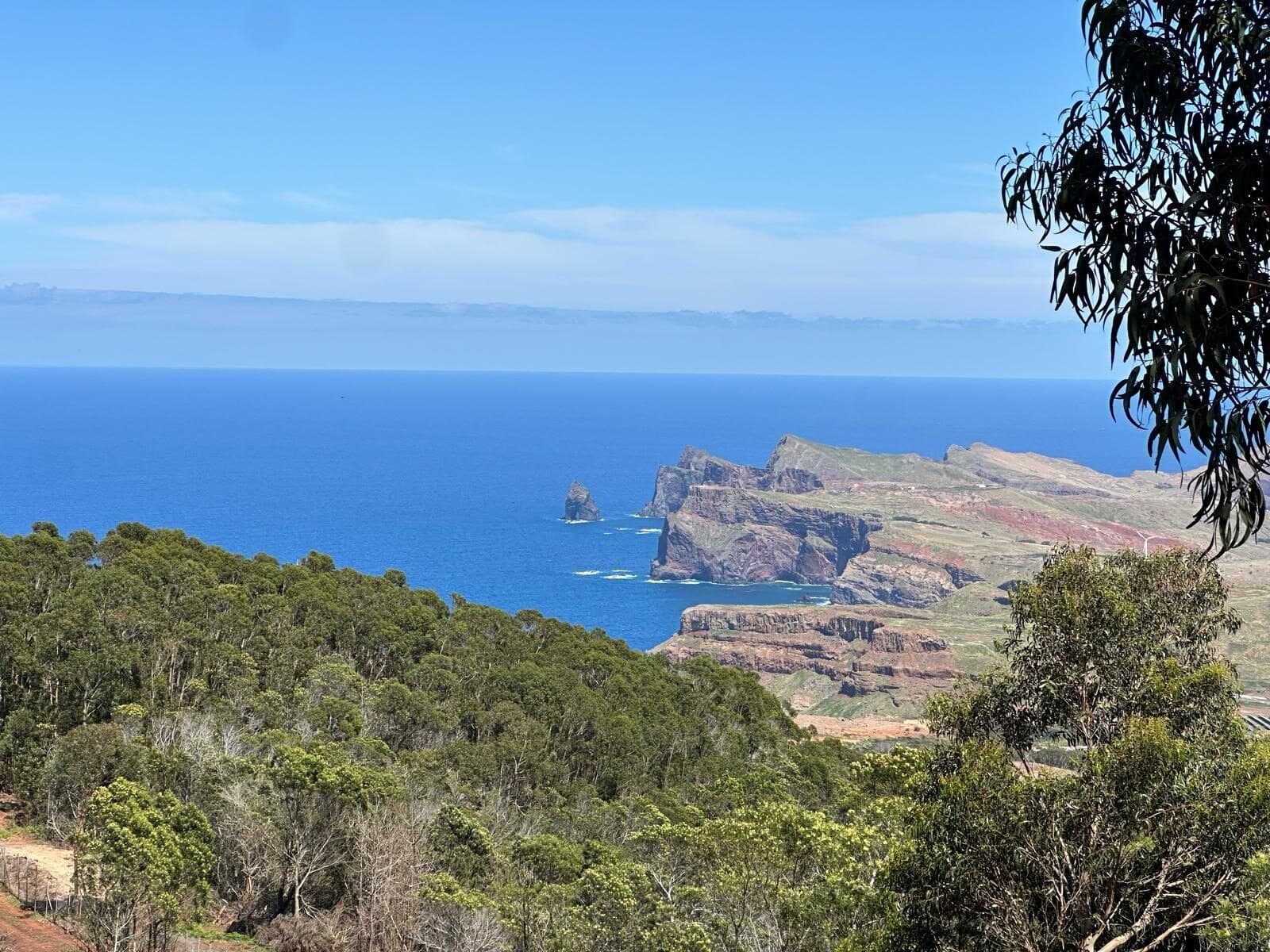
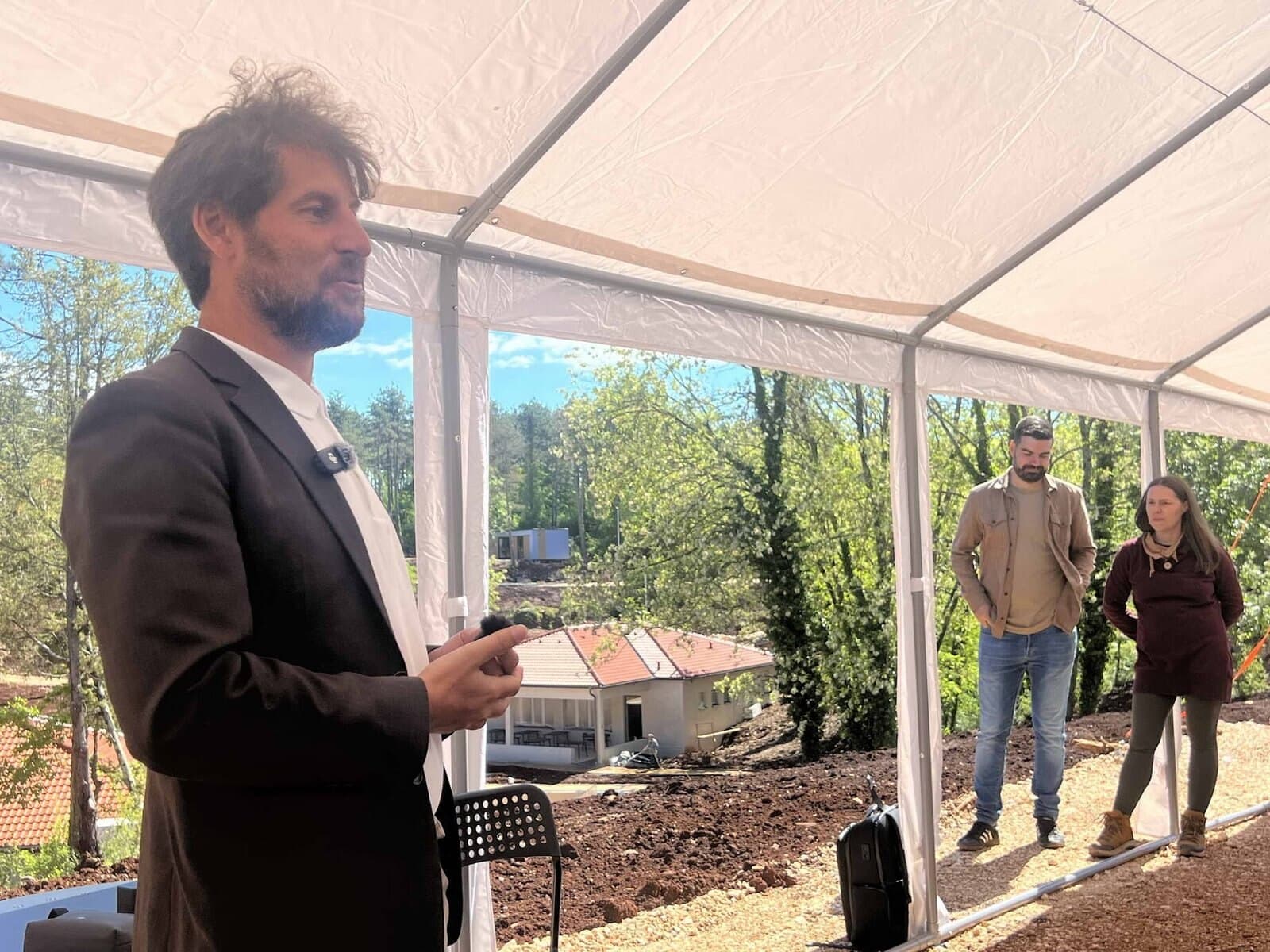
Heute wird die Verbindung von Bildung, Gemeinschaft, Vermögen und unternehmerischer Praxis auch räumlich sichtbar. In Istrien fanden bereits erste Veranstaltungen und eine Familienwoche an einem eigenen Ort statt, während der formelle Ausbau noch abgeschlossen wird. Auf Madeira ist das Grundstück erworben und die nächste grosse Entwicklung nimmt Form an. In Nova Scotia besteht ein weiterer Standort. Weitere Orte folgen erst, wenn aus Möglichkeiten belastbare Orte geworden sind.
Diese Orte sollen zeigen, wie Bildung wieder in eine konkrete Lebenswelt eingebettet werden kann: mit Natur, Gastfreundschaft, Produktion, Investition, Kultur und generationsübergreifendem Lernen. Nach Jahrzehnten wachsender Abstraktion führt der nächste Schritt des scholarium zurück in die Wirklichkeit.
Rückblick · zwanzig Jahre
Der rote Faden
Im Rückblick sieht manches wie eine Reihe verfrühter Versuche aus. Wir bauten soziale Vernetzung, bevor soziale Medien ihren Namen hatten. Wir berieten zu Mehrflaggenstrategien und Geoarbitrage, bevor diese Begriffe ein grosses Publikum erreichten. Wir bereiteten Anleger vor der grossen Finanzkrise auf monetäre Verwerfungen vor und brachten Bitcoin in die universitäre Lehre, als es dort noch kaum als ernstes Thema galt. Ein Studium, das gerade physisch begonnen hatte, wurde innerhalb weniger Wochen digital und schuf damit den Grundstock einer wachsenden Wissensbibliothek.
Das scholarium war seiner Zeit voraus, weil es nie versucht hat, die Zukunft aus der Ferne vorherzusagen. Es hat kleine, reale Versuche unternommen und aus ihnen gelernt. Einige gelangen. Andere kamen zu früh, wurden beendet oder in veränderter Form neu begonnen. Entscheidend war immer die Bereitschaft zur Korrektur.
Der rote Faden ist die Verbindung von Erkenntnis und Verantwortung. Eine Theorie ist erst dann ernst genommen, wenn sie Entscheidungen verändert. Eine unternehmerische Praxis wird erst dann nachhaltig, wenn sie über ihre unmittelbaren Anreize hinausblickt. Vermögen ist gespeicherte Handlungsfähigkeit. Bildung zeigt sich in wachsender Urteilskraft. Das scholarium ist heute ein Träger dieser alten Verbindung. Das Erbe, dem es sich verpflichtet, enthält einen Auftrag an jede neue Generation: aus dem Empfangenen etwas Eigenes zu schaffen, das wiederum Zukunft ermöglicht.
Vermögen ist gespeicherte Handlungsfähigkeit.
Gegenwart · 2026
Ein Platz, der bleibt
Nach zwanzig Jahren gibt sich das scholarium wieder eine einfache Form. Aus vielen Zugängen, Stufen und Angeboten war eine Treppe geworden, auf der die eigentliche Idee kaum noch sichtbar war. Künftig führt wieder eine Schwelle in den engeren Kreis: der Salon.
Der Salon ist die soziale und pädagogische Schwelle der Institution: ein begrenzter Kreis, eine wachsende Bibliothek, kuratierte Aufzeichnungen, wirkliche Orte und Gespräche, in denen Einsicht Folgen haben darf. Wer hier Platz nimmt, nimmt Platz in einer Tradition, die älter ist als jede Universität. Der institutionelle Rahmen ist das Kontor. Aus der Bildungsarbeit wachsen dort Unternehmen, Werkzeuge und Orte, die sich an realen Entscheidungen bewähren müssen.
Information ist heute im Überfluss vorhanden. Knapp sind Auswahl und Verdichtung, das ernste Gespräch und eine Gemeinschaft, in der Erkenntnis Konsequenzen haben darf. Aus der Suche nach einer solchen Gemeinschaft entstand das scholarium. Zwanzig Jahre später ist diese Suche nicht abgeschlossen. Aber sie hat Orte, eine Geschichte und wieder eine klare Form.
Einen Platz, der bleibt.