
Hardcover
€ 44
the standard edition · in German
- 36 chapter plates after old masters
- two-colour typesetting with margin scholia
- delivery on publication
The Faustian Bargain That Made the West Rich and Now Plunders It · Rahim Taghizadegan
Hardly anyone wants to pay taxes; hardly anyone does not live off taxes.
Wherever wealth accumulates, stationary bandits appear: that is what economists call the power that would rather take than create. With it, the merchants of the West struck a bargain and paid tribute for protection and legal certainty.
Published in German as «Händler und Banditen». The English edition is in preparation.
Hardcover € 44 · audiobook € 19 · bundle € 54
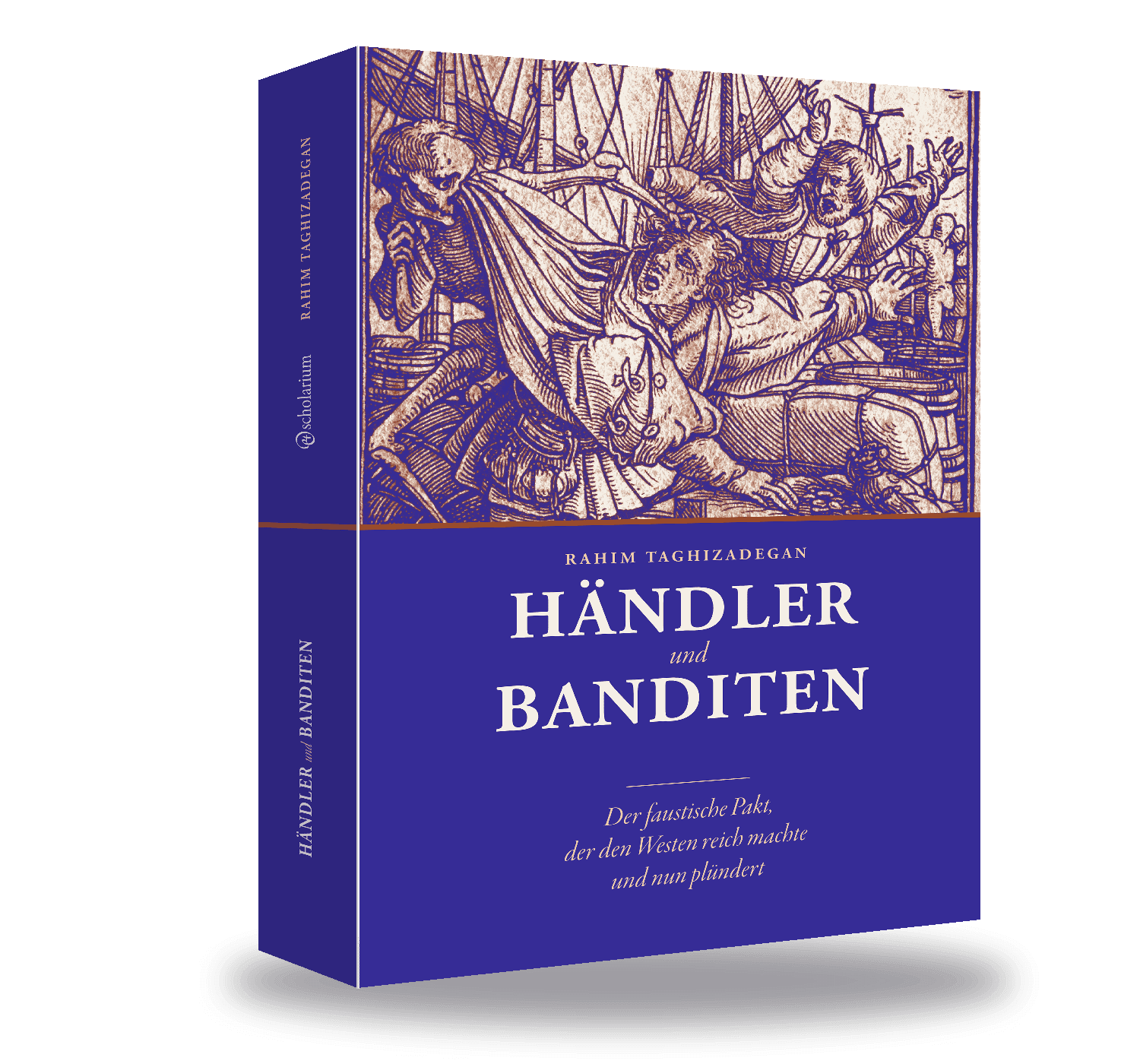
The alliance with violence freed the merchants from violence: the privateers gave up their pirate ships and settled down as industrialists. This bargain is coming apart. What was given in return is dwindling, the rate of plunder is rising, and plunder is taken without bloodshed: through money creation, public debt, and officials who are not liable.
The book tells of the rise and decay of this order, from the clan through the Hanseatic League and the Fuggers to Bitcoin and the thinking machine. Its last part is devoted to what lies in one's own hands: work, wealth, place, and the art of living well along the way.
34 chapters · five parts · 422 pages · 36 chapter plates · more than 250 sources · margin scholia
Other people's actions can be influenced by the promise of a benefit or the threat of harm. The study of the hand that offers has been called catallactics for almost two hundred years. The study of the fist that threatens is only now emerging; I call it cratics. The two have never before been presented together.
Catallactics: the study of exchange, of the order that emerges where strangers make each other offers.
Cratics: the study of power that would rather take than create, and lives off the wealth of others.
Tribute for protection and legal certainty: the alliance with violence that freed the merchants from violence.
Much in this book began in the Scholien. They continue to appear monthly, free of charge.
“I am interested in both: where the summers came from, and how to get through the winter.”
€ 44
the standard edition · in German
€ 19
the complete reading · digital · pre-order
€ 54
hardcover + audiobook · instead of € 63 separately
There is deliberately no e-book: the chapter plates and the typesetting live in the printed book, the voice in the audiobook. The book appears first in German. Book orders are pre-orders; delivery follows on publication.
Front matter, table of contents, the complete prologue and the first two chapters with their chapter plates: 25 typeset pages of the German edition. The PDF is available after joining the Scholien, our newsletter; the download appears right away.
Questions about an order? [email protected]