Origins · 1980s/1990s
Two Legacies
My biography began with two very different legacies which, as it turned out, belonged together remarkably well. My father, an Iranian Azeri, came from a family of farmers and merchants. My mother, a Viennese, came from a family of scholars and printers. From one side came an entrepreneurial spirit, agility, and the desire for economic independence. From the other came books, culture, mountains, and an almost insatiable curiosity about how things connect.
While still at school, I worked at the Institute of Astronomy, founded a student newspaper, and became politically active. I was interested in the big questions, but opinions about them were not enough for me. That is why I chose technical physics. It seemed to offer the most rigorous equipment for moving from conjecture to reliable knowledge.
I specialised as an atomic physicist and worked on risk research, complex systems, and the philosophy of science. Physics taught me something that would remain crucial in every field I later entered: a model is not reality. The more complex a system, the more cautious we should be about imagining that we can control it from outside. That insight leads directly to questions far beyond physics. What happens when the elements of a system are people who learn, err, hope, fear, and change their plans?
The Vienna of my student years was intellectually impoverished, but by no means empty. Those who searched could still find living traces of great traditions. At the Atomic Institute, I encountered Helmut Rauch's world. Erhard Oeser and Franz Wuketits opened paths towards the philosophy of science and evolutionary theory; Harald Mori opened a path towards Viennese psychotherapy and Viktor Frankl's circle. Systems analysis was present in Laxenburg. There were still people in whom the old, interdisciplinary Vienna resonated: a city where physicists, psychologists, philosophers, economists, artists, and entrepreneurs could speak with one another without first seeking permission from the boundaries of their disciplines.
There was only one tradition I could not find in the very place where it had originated: the Austrian School of Economics.
Discovery · 1990s
A Viennese Discovery in America
I had to travel to the United States to encounter the Austrian School as a living tradition. During my stays and studies there, particularly while on a research fellowship in Washington and later at seminars in New York, I met economists who did not treat Menger, Böhm-Bawerk, Mises, Hayek, and Kirzner as museum pieces from the history of ideas. They discussed their questions as open problems of the present.
It was both a discovery and a provocation. How could a school that had arisen in Vienna and gone on to change economic thought around the world have all but disappeared in Austria? At the Vienna University of Economics and Business, there was still scholarly knowledge of its history. Yet as an independent, contentious tradition of inquiry capable of further development, it had been severed. Its most important representatives had been driven out, had emigrated, or had died. What had survived in America was precious, but had already been detached from its Viennese context and was often reduced to a political counter-position.
Alongside physics, I began studying business and sociology. My thesis brought together atomic physics, risk research, economics, and sociology. Formally, it remained a single degree. In substance, it marked the beginning of a path on which I refused to divide knowledge according to the jurisdictions of university faculties.
During this period, Roland Baader became my teacher and mentor. He was not a university professor, but an independent scholar with a rare instinct for the points at which economic theory must have consequences in one's own life. For him, the monetary order, investment, character, and independence belonged together. Later, Hans-Hermann Hoppe became my teacher and mentor. From him I learned the rigour of systematic, realistic thought that remains unimpressed by either academic fashion or political expediency.
Baader and Hoppe represented two qualities that the scholarium would later unite: intellectual consequence and practical consequence.
Founding line · 2000–2001
The Beginning at Drosendorf
On 15 October 2000, a small group met for breakfast at Vienna's Votiv Kino. Out of that conversation came the idea of an F. A. von Hayek-Kreis. We wanted to find out whether Austria's forgotten tradition could be brought back into the conversation.
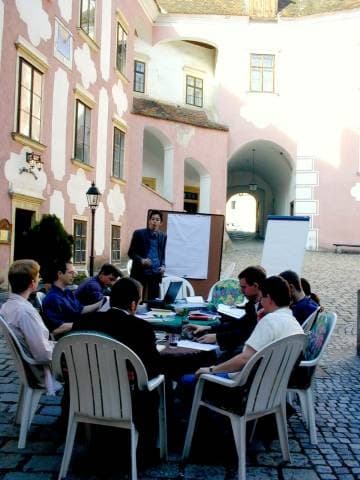
The first retreat took place at Schloss Drosendorf on 30 April and 1 May 2001. Together with Julian Rauchdobler, I moderated the inaugural gathering. Our guest was Friedhelm Frischenschlager, the former Federal Minister of Defence, a co-founder of the liberal Atterseekreis, and one of the last Austrian politicians of his generation to have studied Hayek. A second retreat followed in November with Detmar Döring, Gerd Habermann, and Robert Nef. Drosendorf became the birthplace of our initiative.
These were not mass events. That was precisely where their strength lay. In an old castle on the edge of Austria, people gathered to speak seriously once again about freedom, responsibility, economics, and the future of Europe. Much of what would later define the scholarium was already present in embryo: the conversation within a small circle, the connection between history and the present, the hospitality of a real place, and the courage to take up an almost severed tradition.
Digital workshops · 2001–2007
The First Digital Workshop
At the time, the internet seemed the ideal place for this new beginning. It was an open field, not yet cultivated by a handful of dominant platforms. Small initiatives could build something of their own with modest means.
With liberalismus.at, we created the first Austrian website to introduce the thinkers of the Austrian School to a general German-speaking audience in such breadth. For many readers, it was their first encounter in German with Menger, Böhm-Bawerk, Mises, and Hayek. The site grew into a large archive of biographies, texts, news, and commentary. At times, it reached as many as 5,000 readers a day.
But the name itself already exposed a limit. Liberalism had become a politically charged term. It attracted people in search of a camp and repelled others before the real questions could even begin. liberalismus.at became liberty.li. The move from a German political label to an internationally understood term was also an intellectual move. Freedom became an open question that could be explored only in conjunction with responsibility, experience, and concrete action.
liberty.li was social networking before anyone spoke of social media. The platform combined profiles, groups, forums, comments, weblogs, and the funding of shared projects. It was translated into English and French, with a Slovak version under development. Within its field, it became one of the largest interactive German-language platforms of its day and supported itself through advertising revenue.
The family of platforms even included its own digital gold system. Balances were denominated in grams of gold; transfers between participants were possible, as were deposits, withdrawals, and redemption. It was a centrally managed, database-based ledger of accounts and transactions, not a decentralised system and not a blockchain. Yet it existed years before the Bitcoin white paper. We called the unit of account the Gulden. The system was technically integrated but never launched on a broad scale. This, too, is part of the scholarium's history: we recognised some developments early, sometimes too early to draw all the consequences ourselves.
With choices.li, we took the next step in that learning process. Group identity gave way to the question of a person's real choices. How can one build an independent life? What roles do place of residence, business, wealth, education, health, and personal relationships play? How can risks be distributed across several countries and jurisdictions?
This gave rise, very early on, to a practical laboratory for international life choices, flag theory, and geoarbitrage. We offered advice on emigration, entrepreneurship, wealth structuring, and alternative ways of life long before they became an industry of their own. Christoph Heuermann entered this milieu as a young student and later colleague. With Staatenlos, he went on to develop the subject of flag theory with great success.
The most important result of these years, however, was a correction. Digital reach is not yet a community. Networks can connect people, but they can also gather them into filter bubbles, deepen their alienation, and heighten their sense of political impotence. At the height of its reach, I took the platform offline. I remained committed to freedom. What I abandoned was the idea that it could be marketed as an ideology.
Institution · 2006
2006: The Initiative Becomes an Institute
In 2006, I founded the Institut für Wertewirtschaft. Its unwieldy name was deliberate. It was meant to resist conventional political categories while also recalling that economic life begins with values: with what matters to people, what they are willing to take responsibility for, and how they can serve others.
The Institute was not a think tank disseminating ready-made answers with the money of a political sponsor. It was privately funded by its clients and received no subsidies. From the outset, I ran it as an enterprise. People were to receive something of real value in return for their support: better decisions, deeper insight, and, where wealth was concerned, concrete protection from avoidable mistakes.
From 2006 onwards, we held seminars for investors. We recognised the fragility of the financial system, the distortions created by cheap money, and the danger of a major correction. No one could seriously predict the precise day of a market crash. The mechanisms of the coming crisis, however, could be understood. When the correction arrived in 2007 and 2008, many of our participants were prepared. Their feedback showed that the seminars had been more than intellectually stimulating: they had helped people preserve their savings and wealth.
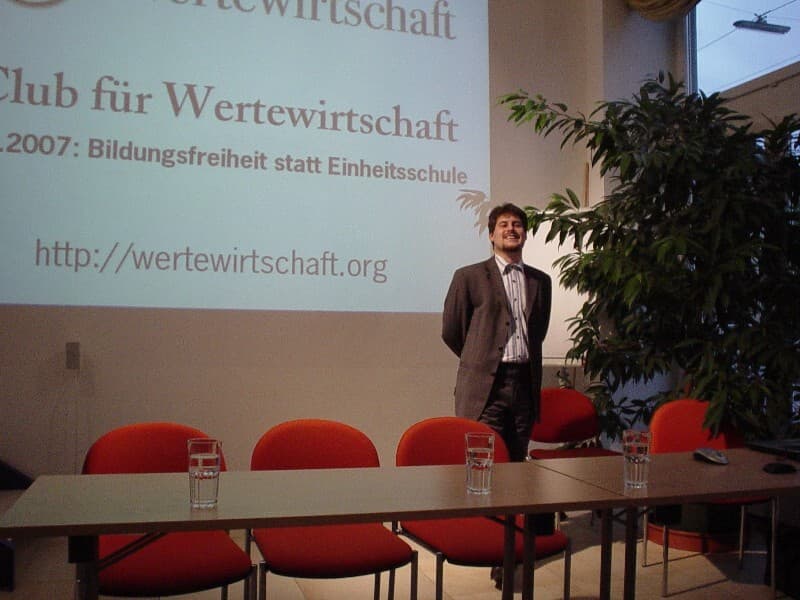
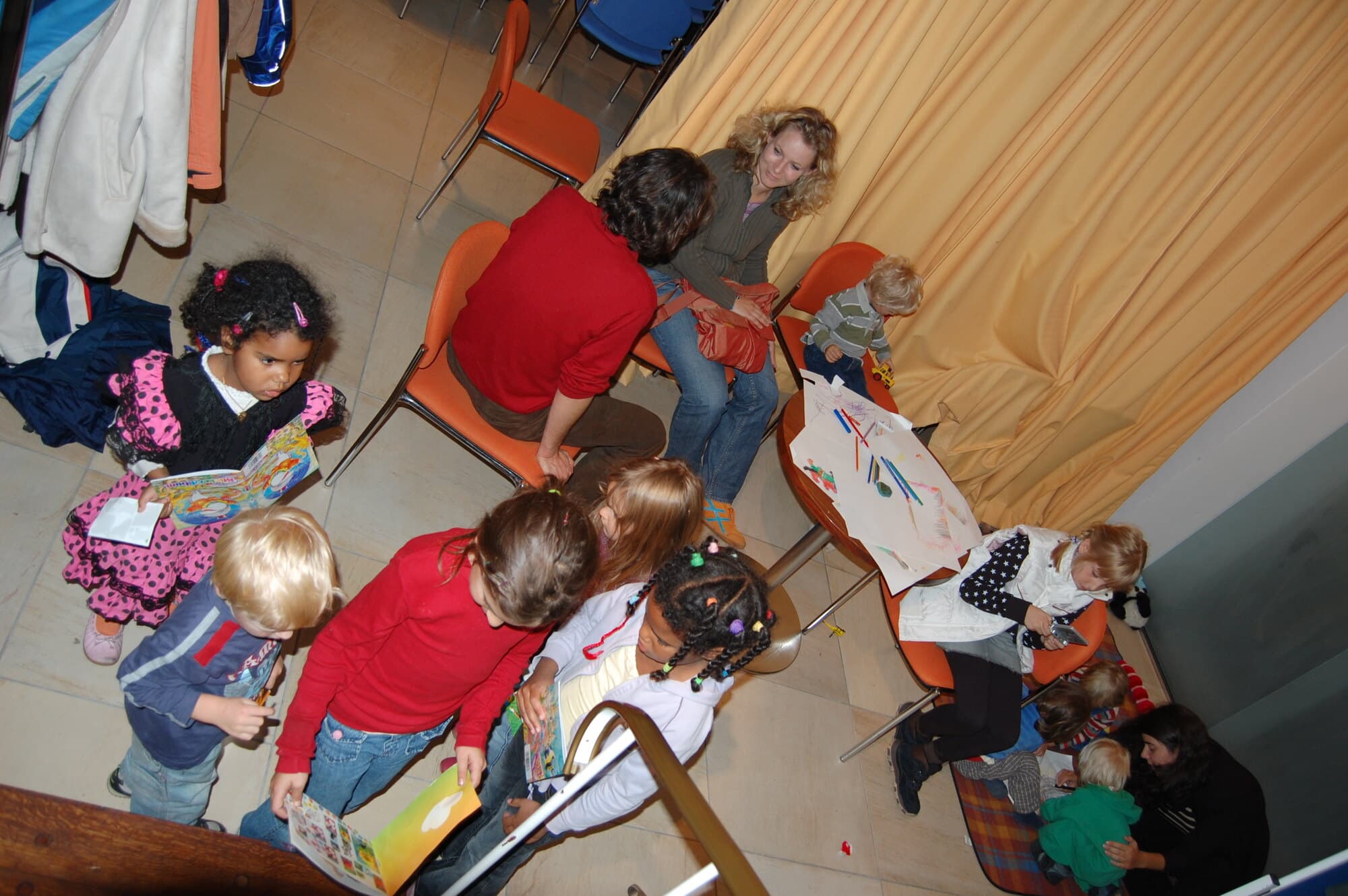
Education was not merely a later side issue. Families, homeschoolers, and unschoolers were invited to the club evening ‘Educational Freedom Rather Than Uniform Schooling’ on 7 September 2007; children were a natural part of the event. The question of how learning might flourish beyond a uniform model led years later to CRAFTprobe and eventually to the Studium Generale.
That experience left a lasting mark on the scholarium. Good theory does not prove itself by explaining everything after the event. It must help people, before a decision, to bear uncertainty more intelligently.
Teaching · 2008–2012
The Austrian School Returns to the University
The Institute led to a growing programme of teaching and public lectures. I taught at numerous universities and institutions of higher education in Austria and abroad, including in Vienna, Halle, Liechtenstein, and Heiligenkreuz. From 2008 to 2012, I taught the course “Der handelnde Mensch in der Wirtschaftstheorie” (“The Acting Person in Economic Theory”) at the Vienna University of Economics and Business.
The Austrian School had returned to a place where its representatives had once taught. Some eight decades after the flowering of its original Viennese tradition, it was once again being taught as a distinct, action-oriented approach, not merely as a chapter in the history of economic doctrines. Later, our “Wirtschaft wirklich verstehen” (“Truly Understanding Economics”) seminars also took place in the building of the former Hochschule für Welthandel, Vienna's historic academy of world trade. It was there, in particular, that one could feel what was at stake: the return of an economics that takes the entrepreneur, knowledge, time, error, and uncertainty seriously.
The book Wirtschaft wirklich verstehen (Truly Understanding Economics) grew out of these courses and seminars. Its ambition was already contained in its title. Economics was to be neither a mathematical game of glass beads nor a collection of political recipes. It was to help us understand how people act under scarcity, how prices transmit knowledge, why good intentions can have bad consequences, and why entrepreneurship is, above all, a way of dealing with uncertainty.
The teaching was never confined to the Austrian School. Psychology, law, history, technology, anthropology, monetary theory, and culture all belonged within it. That connection remains at the core today: the strength of the Austrian School lies in a realistic view of human action that makes the artificial boundaries between these fields permeable.
A new beginning · 2015
From Institute to Learning Enterprise
In 2015, the Institut für Wertewirtschaft became the scholarium. The new name was both a self-correction and a programme. The universitas magistrorum et scholarium was originally a community of teachers and learners. Modern universities had increasingly concentrated on the magistri: on titles, certificates, and institutional jurisdictions. The scholarium was to take the second part seriously again: the learners.
I did not want to found yet another institution that told other people how to live or conduct their affairs. The scholarium itself was to be a learning enterprise. Theory without practice remains empty. Practice without theory is blind to the distortions of the present. Only by combining them can we develop the kind of judgement that can be gained neither from a textbook nor from experience alone.
For many years, the scholarium was preceded by an ampersand, the commercial & that gave this idea a sign of its own. It is an old ligature of the Latin et, meaning “and”. It connected the world of scholars with the world of merchants, leisure with work, books with problems, and Vienna with the world. A sentence from my teacher Roland Baader remained an apt summary: “Commerce unites, politics divides.”
Education in practice · 2015–2020
CRAFTprobe: Learning Before Committing
This idea gave rise to CRAFTprobe, an educational programme for young people. Many young people were expected to choose an educational or vocational path without ever having experienced what different kinds of real work feel like. They knew school subjects and job descriptions, but rarely workshops, businesses, projects, or people who practised something with genuine mastery.
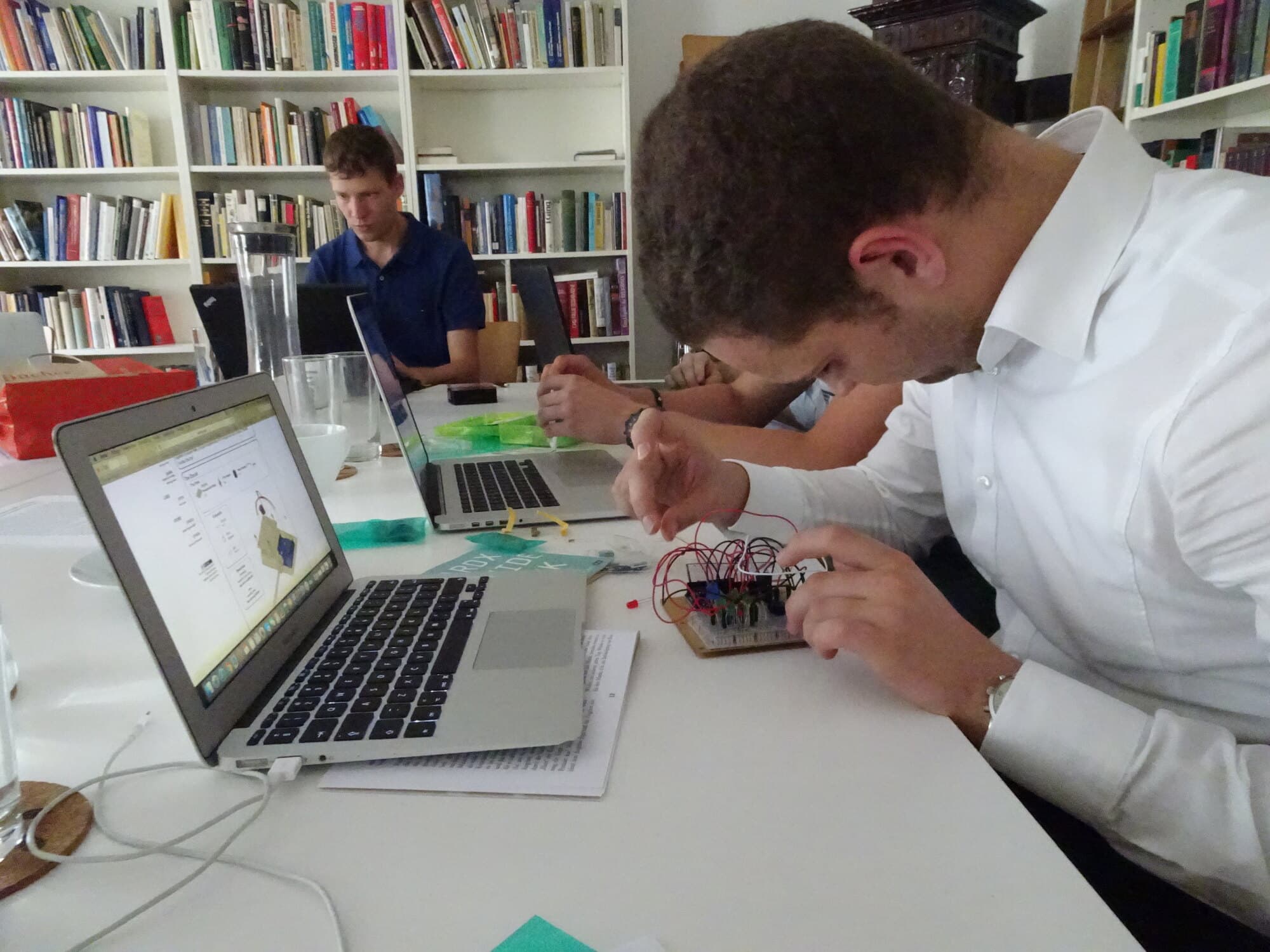
CRAFTprobe started precisely there. Young people could try their hand at different professions, take responsibility for projects of their own, and acquire basic entrepreneurial skills. Digital and analogue tools, culture, nature, technology, art, the market, and personal development all belonged together. Entrepreneurs, craftspeople, artists, and specialists became direct examples. Good theory remained indispensable. It helped turn experience into more than a collection of anecdotes.
The programme was conceived as a Kraftprobe in the best sense of the word: a protected but real passage into an independent life, a test of one's strength. Fifteen young people took part in the second intensive programme in August 2016. The pandemic interrupted this physical form. Its basic idea, however, was not lost. It lives on within the scholarium: learning begins when people try something, accept responsibility for the consequences, and reflect together on what they have experienced.
Anniversary · 2016
Ten Years and a Very Old Book
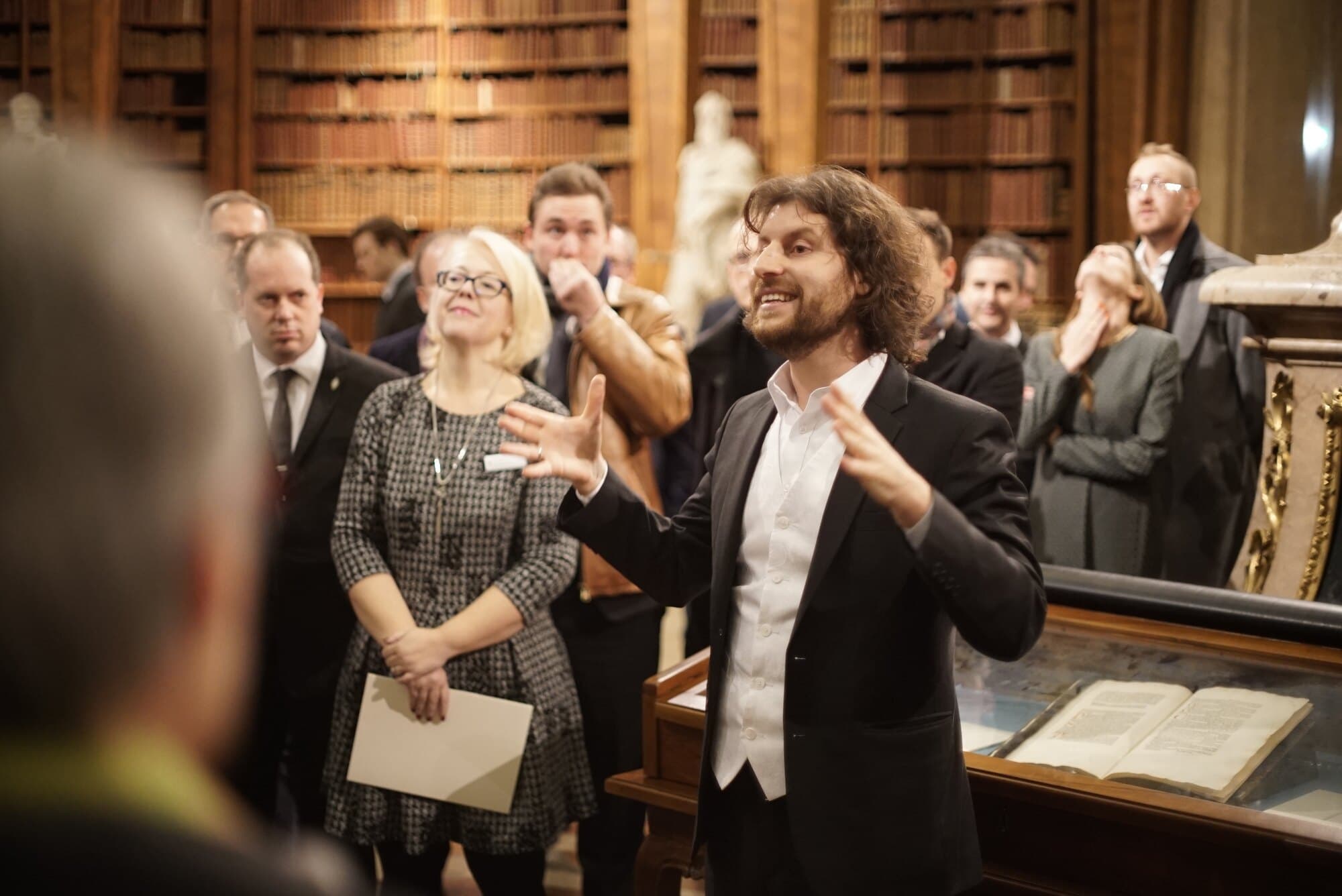
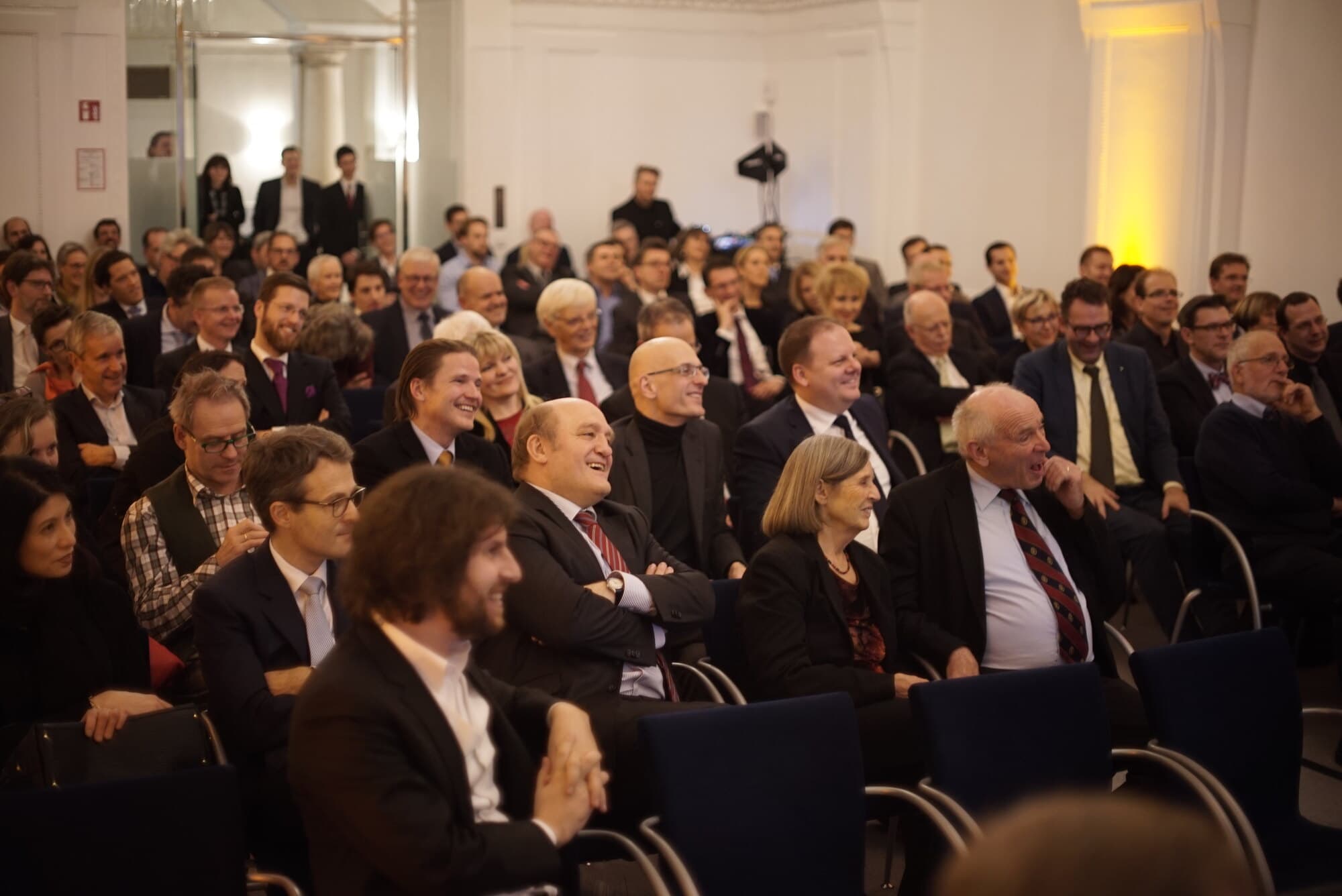
On 3 December 2016, we celebrated our tenth anniversary at the Austrian National Library. Companions from many countries gathered in the State Hall, the Augustinian Reading Room, and the Oratory, among them Hans-Hermann Hoppe, Jörg Guido Hülsmann, Robert Nef, and Daniel Model. The small initiative had grown into a privately funded institution of higher learning with students and guests from around the world.
The anniversary also looked far back into the past. One project was devoted to Johannes Nider's De Contractibus Mercatorum, a fifteenth-century treatise on merchants' contracts. It contains remarkably early reflections on needs and prices, the value of money, time, entrepreneurial profit, property, and contract. The text was to be made available in Nider's native language for the first time.
This, too, is a typical scholarium story: a problem of the future led to an almost forgotten manuscript, and the ancient manuscript proved strikingly contemporary.
Publications · 2007–present
Books, Editions, and Scholien
What emerged from seminars and conversations grew over the years into a large body of written work. More than fifteen books appeared under my name or in co-authorship, among them Vom Systemtrottel zum Wutbürger, Österreichische Schule für Anleger, Alles, was Sie über die Österreichische Schule wissen müssen, Wirtschaft wirklich verstehen, Die Nullzinsfalle, Geld her oder es kracht, and Europa auf der Intensivstation.
There were also translations, introductions, and edited volumes. Of particular importance was my complete German edition of Mises's Human Action, published in four volumes in 2019 as Menschliches Handeln. Other projects made texts available that had become all but inaccessible in the German-speaking world. Translation here never meant merely carrying words from one language into another. It meant taking up a broken thread of thought.
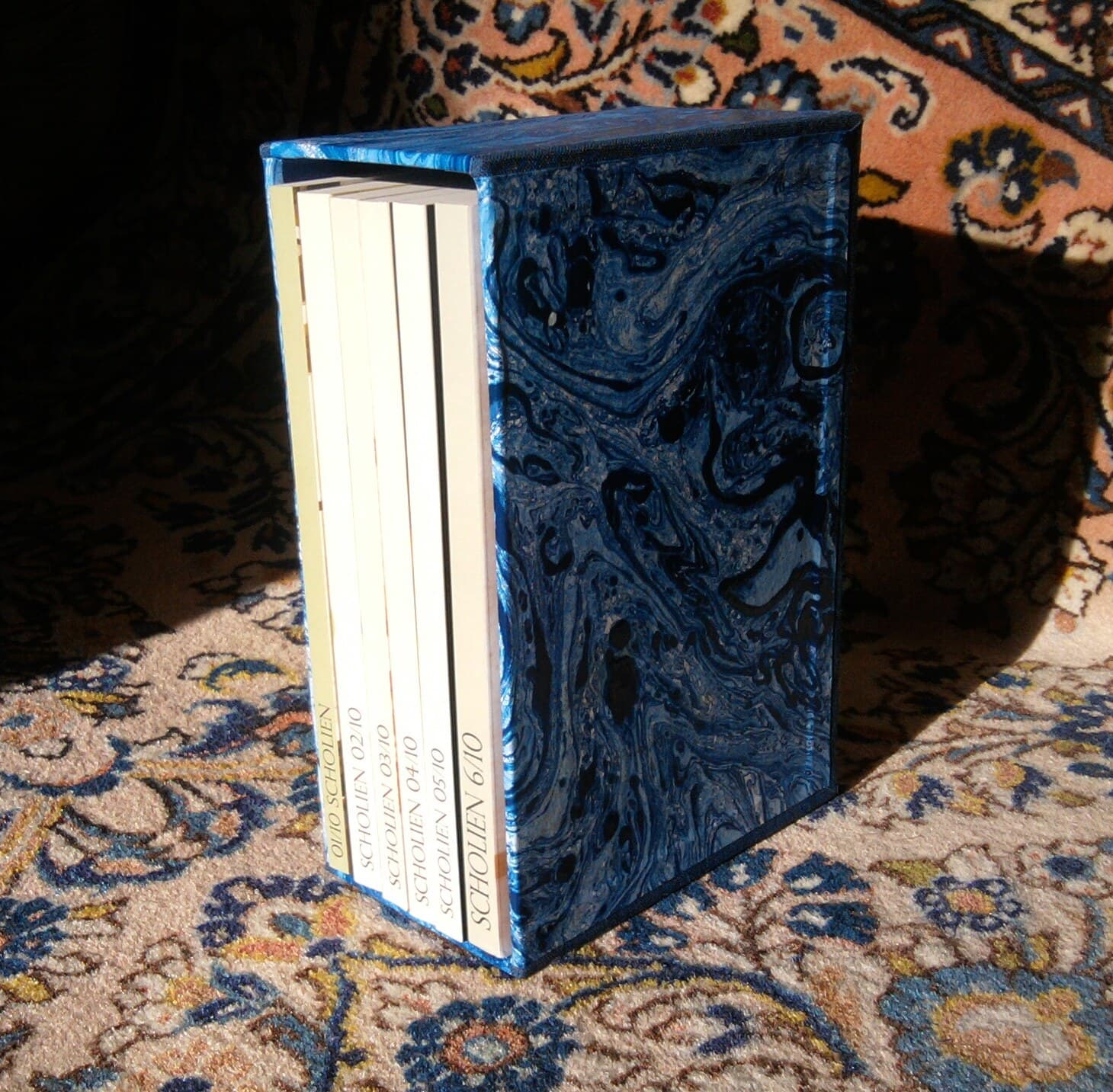
The Scholien began appearing in 2009. They were printed marginalia on a great, invisible text: observations, questions, essays, book recommendations, encounters, and insights that did not submit to the rhythm of daily media. For many years, they arrived by post as journals and booklets. In an age of growing digital distraction, they were a deliberately slow medium. They later continued digitally without abandoning the demand for concentration and density.
I also engaged with Bitcoin at an early stage. I began observing the experiment in 2009; from 2011 onwards, I introduced it into university teaching at a time when it was virtually unknown even among economists. As far as I have been able to establish to this day, that made me the first economist to include Bitcoin in a university curriculum. In 2012, I published an early economic essay about it in German; in 2018, Bitcoin received a chapter of its own in the expanded edition of Wirtschaft wirklich verstehen. Its significance for me never lay in a short-term price target. Bitcoin was a real-world experiment in money, property, trust, technology, and institutional evolution. Once again, an abstract subject was joined to a practical decision.
Library · since 2012
The Library as Memory and Workshop
Meanwhile, Vienna became home to the largest private library devoted to the Austrian School and liberalism. Parts of the collections of Roland Baader, Hans-Hermann Hoppe, and Rainer Ernst Schütz found a new home at the scholarium. They were joined by rare editions and further estates.
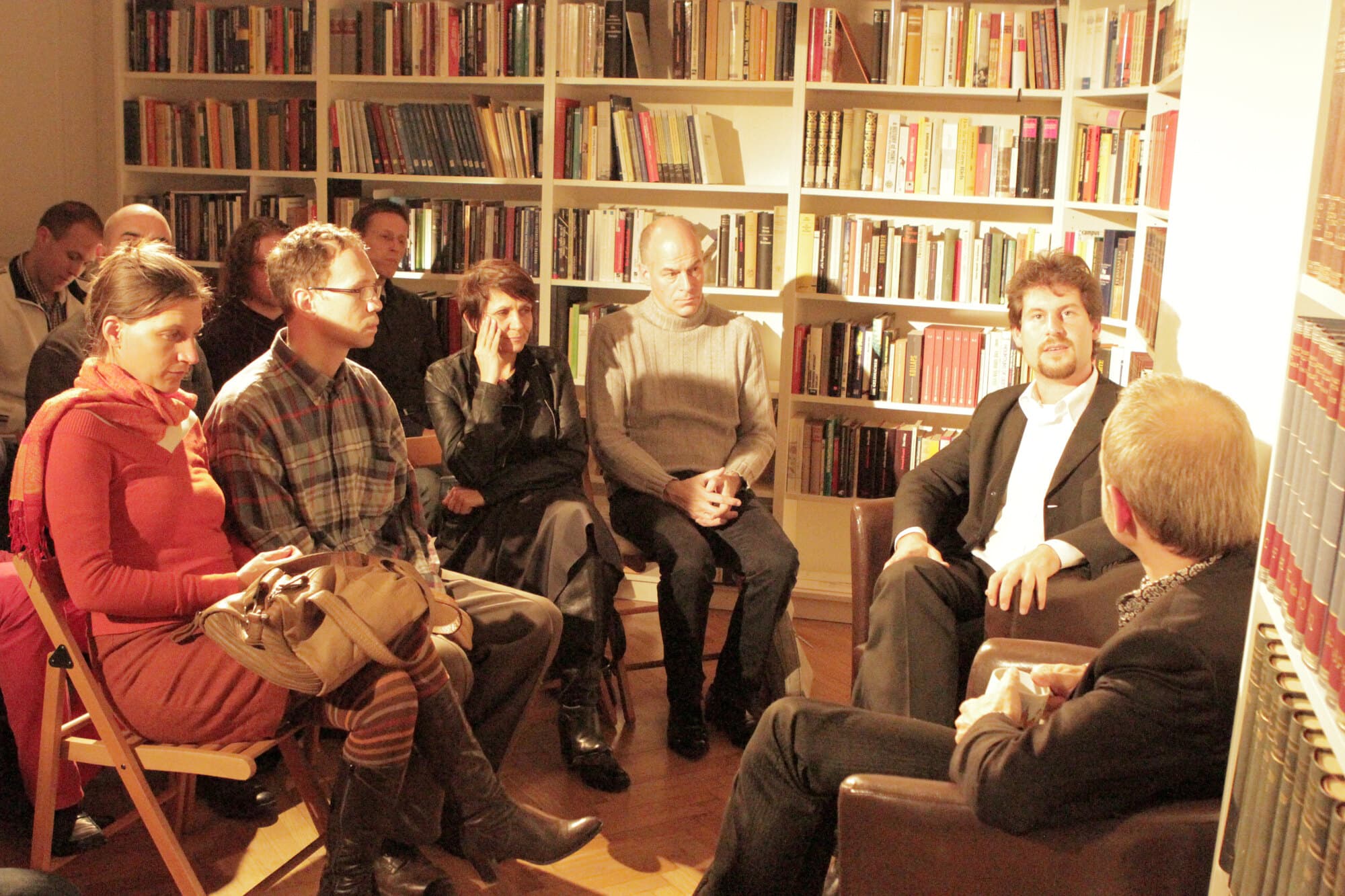
This library was not an ornamental piece of furniture. It was a working tool and a store of memory. Salons, seminars, and long conversations took place between its shelves. Books that disappeared into closed stacks elsewhere lay open on the table and once again became part of a living discourse. At the same time, the place was a reminder that knowledge has a material dimension: someone must collect, preserve, arrange, and read books, and make them available to future readers.
Studium Generale · since 2020
A Course of Study Begins – and Goes Digital Overnight
The Studium Generale grew out of the physical salons and seminars held in this library. Its first session took place on 6 March 2020. The programme was conceived as an interdisciplinary course of study for adults: demanding and discursive, without the rituals of examinations or the compulsion to issue certificates.
It had barely begun when the pandemic made a physical continuation impossible. On 27 March, we ventured into an experiment in distance learning. What elsewhere might have been planned as a multi-year digitisation project emerged within weeks out of necessity. The conversations continued, were recorded, and gradually formed an extensive archive.
Since 2024, the Studium has taken place almost entirely online. The distance format is now giving rise to an educational library in which video, audio, text, and structured knowledge models are brought together. The digital realm does not replace personal conversation. It preserves, distils, and opens it to people spread across countries and time zones.
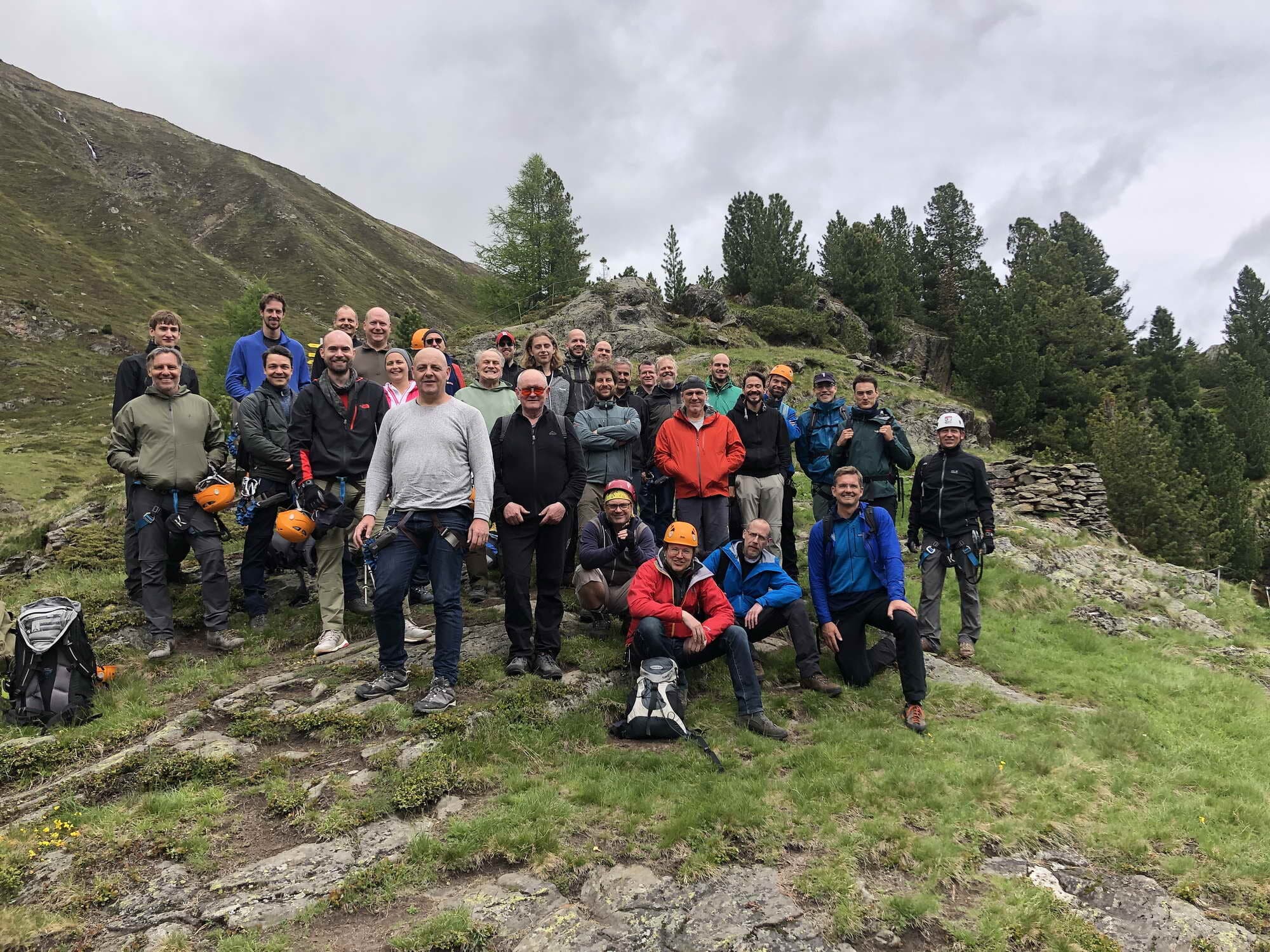
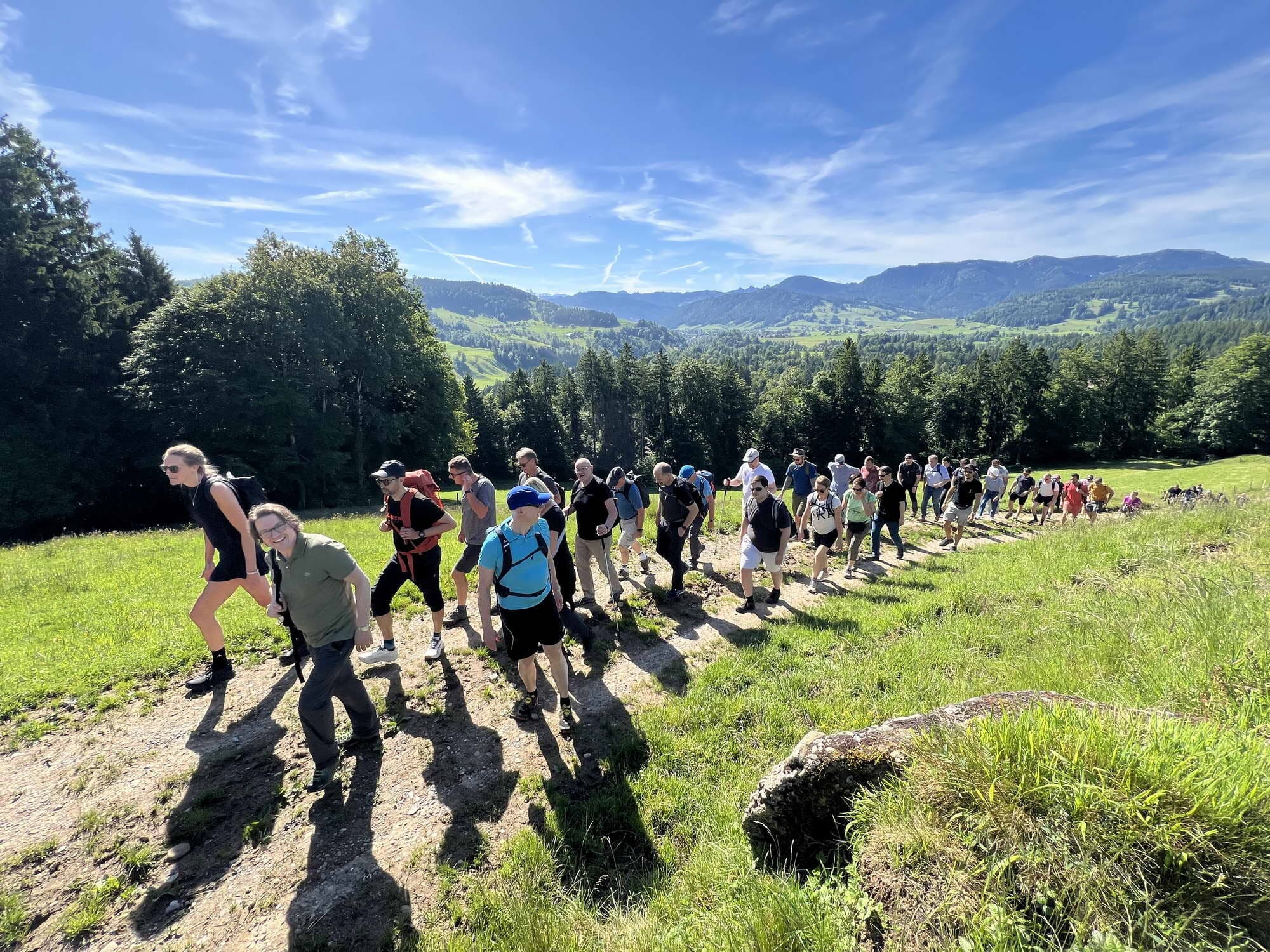
Since 2022, the AlpenSalon has regularly carried this connection back into a shared physical experience. Multi-day seminars in Obergurgl, Salzburg, Neustift, and at Lake Ägeri combined lectures and conversations with hiking, mountain practice, and life in a common place. In this way, the digitally grown course of study remained rooted in real landscapes and encounters.
This brought the story full circle. The internet that had made liberalismus.at, liberty.li, and choices.li possible became a tool once again. This time, a body of thought and experience accumulated over many years stood at the centre. Reach was secondary to it.
Places · Vienna, Zug, Istria, Madeira
From Vienna to Zug and to Real Places
The scholarium was never merely an educational offering. It accompanied business formations, investment decisions, and the stewardship of wealth. In 2024, the operational educational work of scholarium GmbH in Vienna was joined by scholarium AG in Zug as the group's corporate and capital layer. Here, too, the same principle applied: anyone who speaks about entrepreneurship, money, and uncertainty must be prepared to commit their own capital and assume their own responsibility.
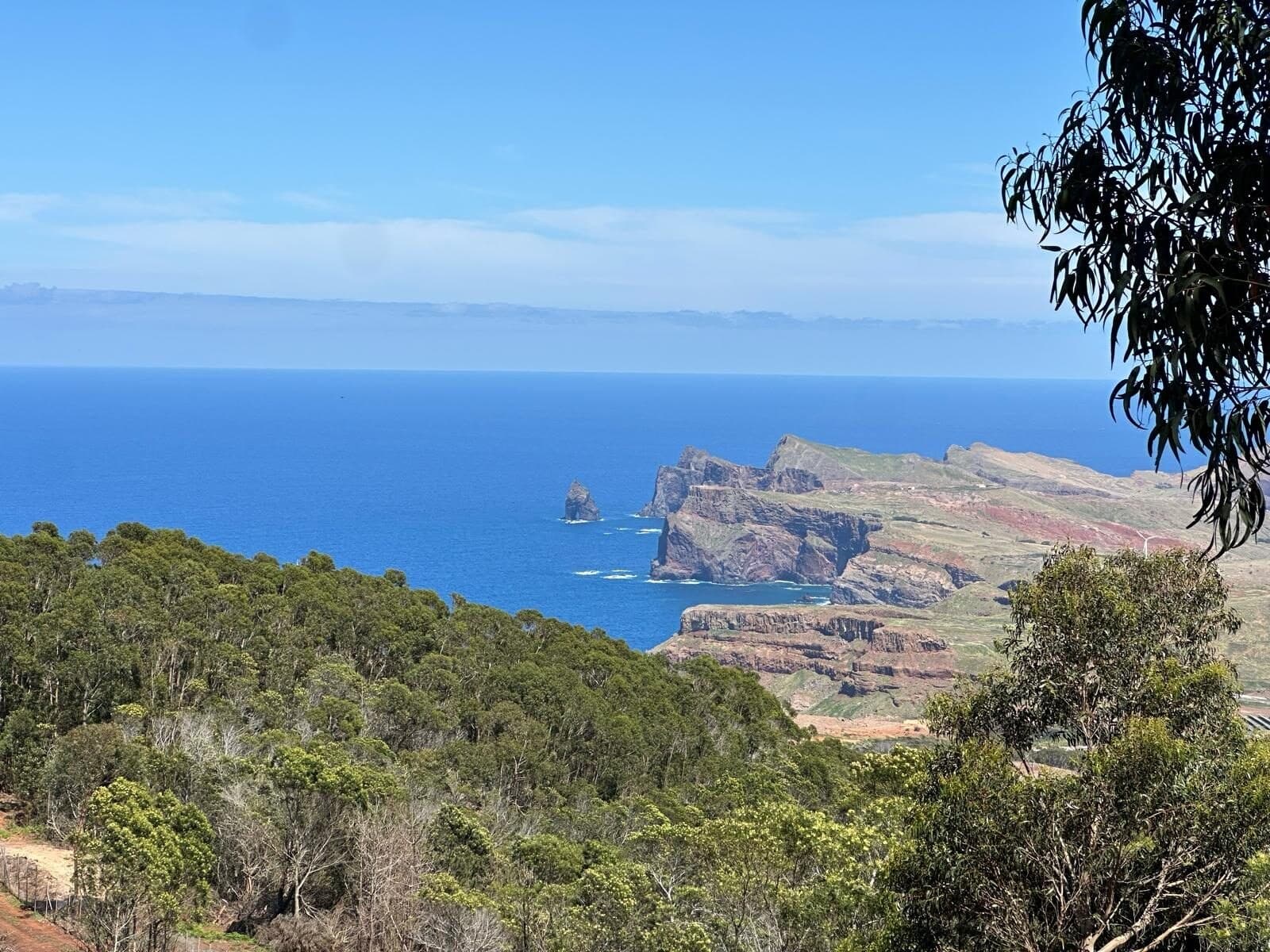
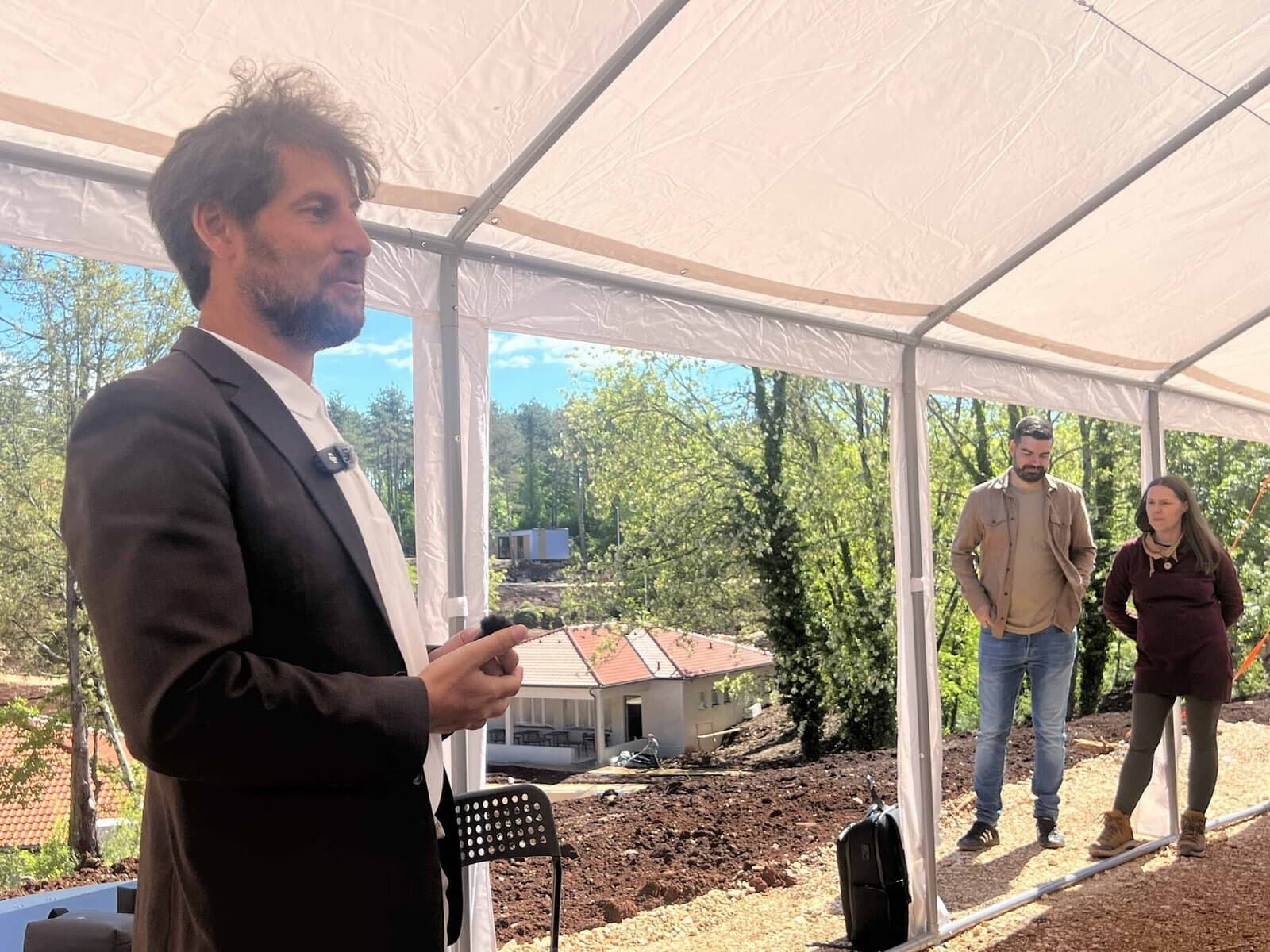
Today, the connection between education, community, wealth, and entrepreneurial practice is becoming visible in physical form as well. In Istria, the first events and a family week have already taken place at a site of our own, while its formal development is still being completed. On Madeira, the land has been acquired and the next major development is taking shape. Further exceptional location projects on three continents will be presented publicly only when possibilities have become dependable places. Some of them will come as a surprise.
These places are not branches of a seminar business. They are meant to show how education can once again be embedded in an actual lifeworld: with nature, hospitality, production, investment, culture, and learning across generations. After decades of increasing abstraction, the scholarium's next step leads back into reality.
Looking back · twenty years
The Common Thread
In retrospect, some of this may look like a succession of premature experiments. We built social networking before social media had a name. We integrated a digital ledger of gold accounts before the Bitcoin white paper. We advised on flag theory and geoarbitrage before the terms reached a broad public. We prepared investors for monetary upheaval before the great financial crisis, and brought Bitcoin into university teaching when it was barely considered a serious subject there. A programme that had only just begun in person went digital within weeks and in doing so created the foundations of a growing library of knowledge.
The scholarium was ahead of its time because it never tried to predict the future from a distance. It conducted small, real experiments and learned from them. Some succeeded. Others came too early, were ended, or began again in a different form. What mattered was always the willingness to correct course.
The common thread is therefore neither an ideology nor a business model. It is the connection between knowledge and responsibility. A theory is taken seriously only when it changes decisions. Entrepreneurial practice becomes sustainable only when it looks beyond its immediate incentives. Wealth is stored capacity for action. Education reveals itself in the growth of judgement.
The present · 2026
A Place That Endures
After twenty years, the scholarium is once again giving itself a simple form. Many different points of entry, tiers, and offerings had become a staircase on which the original idea was barely visible. From now on, a single threshold will once again lead into the inner circle: the Salon.
It is limited to 144 Salon Seats. A Salon Seat is a perpetual right of participation and access which, once paid in full, may be freely transferred and resold. As at an old university, participation begins with a one-off matriculation of CHF 1,440; there is no annual renewal. The Seat opens the door to the private circle, the digital library, and the curated recordings. Seminars, journeys, and special formats may be selected separately from there.
The first 144 holders will receive, as a founding gift, a signed, hand-numbered limited edition of Win-Win: Eine Weltgeschichte des friedlichen Tauschs, von der Faust bis Bitcoin (Win-Win: A World History of Peaceful Exchange, from the Fist to Bitcoin). The book tells the story of how exchange has wrested ground from violence over thousands of years and turned strangers into partners. It thereby returns to one of the scholarium's oldest insights: good economics begins where people do not have to rule one another in order to build something together. The limited edition does not embody the Salon Seat, forms no part of it, and will not be issued again upon a subsequent transfer.
Information is abundant today. What is scarce is selection and distillation, serious conversation, and a community in which insight is allowed to have consequences. The scholarium arose from the search for such a community. After twenty years, that search is not over. But it has a place, a history, and once again a clear form.
A place that endures.